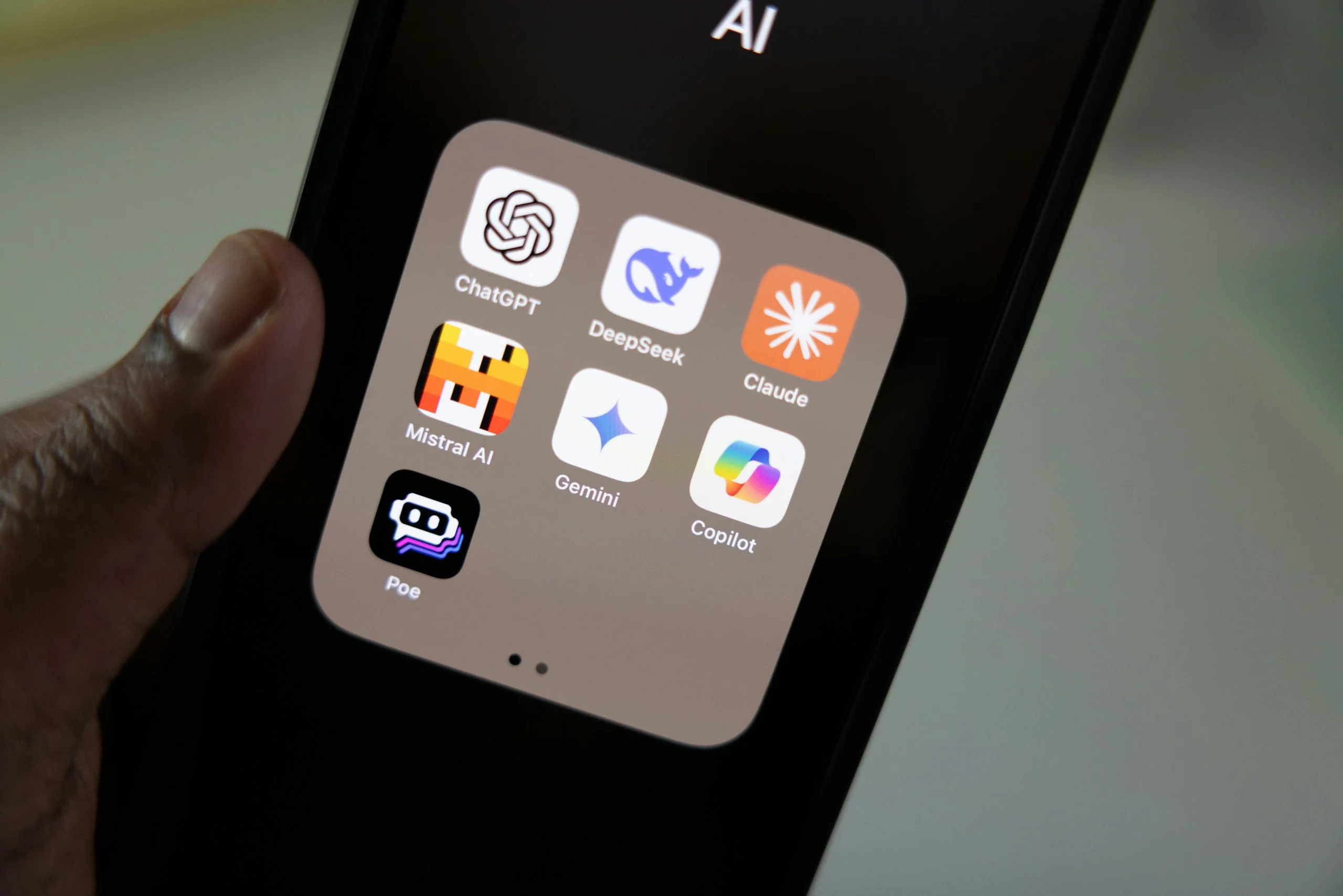
You probably use ChatGPT or Google Gemini daily to write emails, summarise documents or look up quick information. It has become a reflex for many of us. But have you ever asked yourself how these tools decide what is true and what is false?
In the world of before, a reliable source was a book published by a recognised house, an article signed by a journalist or a peer-reviewed study. Today, the definition is changing radically. Artificial intelligence does not “read” sources the way we do; it ingests billions of data points and calculates probabilities.
This paradigm shift upends our relationship with truth and information. In this article, we will explore how AI engines are redefining reliability and how you can navigate this new ecosystem without falling into its traps.
What makes a reliable source, in brief
A reliable source is one whose author you can identify, whose evidence you can check and whose origin you can trace, and whose interest in convincing you is known. An AI answer is not one in itself: it is a synthesis, only as good as the pages it relies on.
Before using a piece of information, we ask five questions:
- The author: who is speaking, and in what capacity?
- The date: is the information still up to date?
- The evidence: does the figure point to a study, an official text, public data?
- Cross-checking: does another independent source say the same thing?
- The interest: who gains from your believing it?
Many university libraries teach a similar approach, the SIFT method described by researcher Mike Caulfield in 2019: stop, investigate the source, find better coverage of the topic, then trace the claim back to its original context.
What was a reliable source (before AI)?
Historically, assessing the credibility of a piece of information rested on tangible, human criteria. These methods were taught at university or in journalism schools. It was a solid framework for filtering out the noise.
Here are the traditional pillars of reliability:
- Authority: who is the author? Do they have the qualifications or the experience?
- Objectivity: is the information neutral or does it serve a particular agenda?
- Accuracy: are the facts verifiable and sourced?
- Currency: is the information up to date?
These criteria show their limits when faced with AI, however. An algorithm does not care about the author’s qualifications. It does not understand the concept of reputation the way a human does. For an AI, a very popular Reddit post can sometimes carry as much statistical weight as a rarely cited academic article.
Comparison: human criteria vs algorithmic criteria
| Criterion | Traditional approach (human) | AI approach (algorithmic) |
|---|---|---|
| Validity | Based on the reputation of the author/publisher | Based on the recurrence of patterns in the data |
| Bias | Critical judgement and context | Statistical biases inherited from training data |
| Trust | Institutional (Le Monde, EPFL, etc.) | Probabilistic (the most likely next word) |
| Context | Cultural and nuanced understanding | Semantic analysis without real consciousness |
How do AI engines determine reliability?
Artificial intelligence is not looking for “truth” in the philosophical sense. It is looking for statistical coherence. When a language model (LLM) generates an answer, it predicts the most plausible next words based on its training.
Data analysis and recurrence
Imagine that AI has read the whole internet. If 90% of texts associate “sky” with “blue”, the AI will conclude that this is reliable information. For an AI, reliability is often a question of volume and repetition. If a piece of false information is repeated often enough on high-traffic sites, it risks being ingested as a truth.
Human validation (RLHF)
Fortunately, this is not the Wild West. Model creators use techniques such as reinforcement learning from human feedback (RLHF). Humans rate the AI’s answers to teach it to favour quality sources and avoid toxic content. It is an essential safeguard, but it is not foolproof.
Live search and cited sources
Word prediction is no longer the whole picture. Google's AI Overviews and AI Mode, like ChatGPT's search, fetch pages from the web at the moment of the question and display links to them: this is retrieval-augmented generation (RAG). OpenAI uses a dedicated crawler for this, OAI-SearchBot, separate from the one that collects training texts.
This changes reliability in two ways. The answer can be more up to date, since it relies on recent pages. But it inherits their flaws: if the pages selected are weak, the synthesis will be too, in an equally confident tone. Hence our habit: open the cited sources, check that they really say what the answer attributes to them, and go back to the original document when the cited source is itself only a relay.
The main challenges of AI-based evaluation
AI is a remarkable tool, but it raises complex problems when it comes to reliability. The first is the “black box” effect. We do not always know which precise sources were used to generate a given answer.
Algorithmic bias
Algorithms are not neutral. They reflect the data they were trained on. If that data contains mostly Western or English-speaking viewpoints, the AI will tend to treat those perspectives as more “reliable” or standard, marginalising other world views.
Hallucination and verification
This is the best-known problem: AI can invent facts with absolute confidence. It can cite sources that do not exist or attribute quotes to the wrong people. For the user, that makes verification tedious. You can no longer blindly trust generated text, even if it looks professional.
What a study says about trust in AI
According to the global study by the University of Melbourne and KPMG published in 2025, covering more than 48,000 people in 47 countries, only 46% of people say they are willing to trust AI systems. This distrust has its reasons: in a September 2025 publication, OpenAI explains that the methods used to train and evaluate models reward a guessed answer rather than an admission of uncertainty, which keeps hallucinations going.
TO READ: How do you structure a site to be quoted correctly by AI?
The concrete impact on our society
This redefinition of what a reliable source is has direct consequences for our professional and personal lives.
Education and research
Students use AI for their coursework. The risk is seeing a generation emerge that no longer knows how to find information at the primary source, and settles instead for the summary digested by an algorithm. Swiss and European universities need to adapt their curricula to teach AI criticism rather than banning it.
Journalism and media
The media are under pressure. If Google offers a direct AI-generated answer (AI Overviews, AI Mode), the user no longer clicks on the newspaper’s link. That raises an economic question, but also a democratic one: if the primary source disappears for lack of revenue, what will the AI train on in the future?
Best practices for assessing sources in the age of AI
So how do you cope? You cannot stop progress, but you can adapt the way you work. Here is a pragmatic approach to using AI without being fooled by it.
1. The triangulation rule
Never rely on a single AI answer for a critical decision. Cross-check the information. If ChatGPT gives you a key figure for your marketing strategy, ask it for its source, then verify it on Google or in an official report.
2. Understanding the tool’s limits
Use AI for what it does best: summarising, rephrasing, coding. Be far more cautious when it comes to precise historical facts, medical data or very recent events (on which it has little perspective).
3. Consulting human experts
Human intuition and experience remain irreplaceable for putting information in context. AI can tell you what happened, but an expert can better explain why it matters for your specific business.
Towards a new digital hygiene
The notion of a reliable source has not disappeared, it has become more complex. We are moving from an era of institutional trust to an era of continuous verification. AI is a powerful assistant, but it must not become your only editor-in-chief.
For entrepreneurs and decision-makers, the stakes are high: use the power of AI to save time, while keeping a sharp critical mind to avoid strategic mistakes. Next time you copy and paste an AI answer, take three seconds to ask yourself: “If this were wrong, what would the consequences be?”
Sources
- KPMG and University of Melbourne: trust, attitudes and use of AI, global study 2025
- OpenAI: why language models hallucinate (2025)
- Google Search Central: AI features and your website
- OpenAI: overview of OpenAI's crawlers
- Mike Caulfield: SIFT, the four moves of verification (2019)
- UNESCO: artificial intelligence in education