
Understanding how to calculate the profitability of a promotion starts with one question: what do you earn after funding the benefit granted to the customer? At Smart Impact, we keep an offer when it serves a precise objective and brings a measurable additional contribution. More orders is not enough.
The promotions guide published by Shopify on 15 October 2026 highlights the importance of protecting margins and perceived value. To decide, though, you need to go beyond choosing an attractive percentage. Here is a method to compare offers before launching them, then check what they actually bring in.
Are you trying to clear stock or to sell more?
Clearing an old collection and increasing sales of a permanent product do not call for the same calculation. In the first case, compare the immediate sale with keeping the stock: storage, sales still possible and later markdowns. In the second, compare the operation with the sales expected at the usual price.
Let us take an accessories shop as a common thread, with no reference to a real client. It is considering an offer on a bag, a bundle with a pouch, or a gift. Before choosing, it writes down the result it wants: clear the bags from an old collection or grow purchases from the current range.
Also note the references concerned, the duration and the minimum expected result. If the goal is to acquire customers, separate the contribution of their first order from that of their later purchases. Do not include hypothetical future purchases as revenue already secured.
How do you calculate the profitability of a promotion per order?
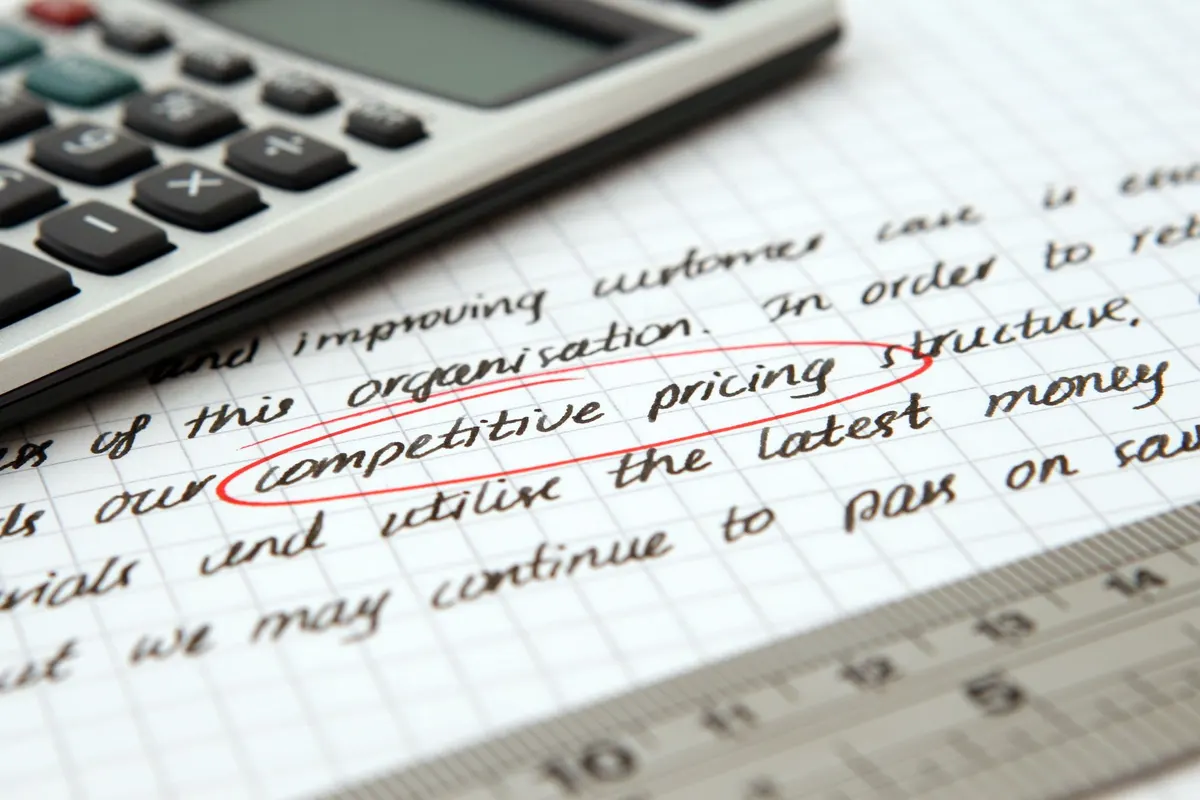
Start with revenue after discount, excluding tax where VAT applies. Subtract the cost of the products, payment fees, preparation, packaging and any delivery you bear. Also include an estimate of return costs.
The remaining amount is the order’s contribution, also called margin on variable costs. It is used to cover fixed costs, then to generate a profit. It is therefore not the company’s net profit.
Competiprice’s teaching example starts with an item sold for 100 euros excluding tax, with a purchase and shipping cost of 70 euros. A 10% discount brings its price down to 90 euros. The margin falls from 30 to 20 euros.
For our shop, this calculation is only the starting point. It adds the other order costs before validating the offer. A contribution calculated only after buying the product overestimates what remains available.
Keep the expenses specific to the operation on a separate line: creating the visuals, setup or extra logistics. That way you avoid forgetting them or counting them twice.
How many additional sales do you need?
With constant unit costs, divide the usual contribution by the contribution after the discount. The result gives the volume multiplier needed to keep the same total contribution.
In the previous example, 30 ÷ 20 = 1.5: you need 50% more sales. This threshold offsets the drop in margin. It does not yet fund any additional campaign spending.
To include these costs, use this formula:
Orders needed = (total expected contribution without promotion + extra costs of the operation) ÷ contribution per discounted order.
Round up to the next whole number. The calculation assumes comparable orders and a stable unit contribution. If fulfilment requires extra staff beyond a certain volume, redo the calculation with that cost included.
You can also start from the volume you consider achievable. Divide the contribution to be preserved, plus the campaign costs, by that number of orders. You get the minimum contribution to keep per order, and therefore the maximum discount compatible with that assumption.
A zero or negative contribution cannot be offset by multiplying the same sales. In that case, review the price, the costs or the make-up of the proposal.
Discount, bundle or gift: what should you compare?
Compare the offers on the complete order. For our shop, the price of the bag is not enough to decide between a discount, a pouch added to the basket and a free pouch. Each option changes revenue, the products shipped and sometimes the preparation.
| Offer | Calculation to perform | Business question |
|---|---|---|
| Discount on the bag | Discounted price minus all variable costs | Does the discount trigger enough extra orders? |
| Bag and pouch bundle | Bundle price minus the cost of the two items and handling | Is the pouch really added to the purchase? |
| Free pouch | Basket revenue minus products, gift and handling | Does the gift trigger the purchase or a larger basket? |
For the gift, use its real cost, not the value shown to the customer. Add its packaging and any extra shipping. Also check its availability: an offer that depends on an out-of-stock accessory becomes hard to honour.
For a bundle, also compare the result with the usual separate purchases. If customers already buy both products together, the bundle mostly reduces revenue. If they usually add only the bag, the pouch may bring an extra contribution.
On the site, show the exact content, the benefit and the conditions next to the buy button. Designing these journeys is part of our e-commerce support.
Which sales does the promotion shift?
Orders that use a code are not all created by that code. Some correspond to purchases that were already planned, now less profitable. Others replace a sale of a neighbouring product: this is cannibalisation.
In our shop, therefore, watch the other bags during the offer. If the discounted model rises while the models at the usual price fall, look at the contribution of the whole range. The success of one item can hide an overall decline.
Look at the following period too. A customer who buys several items now may simply be bringing forward their next purchase. The review should cover a purchase cycle suited to the products, rather than stopping on the last day of the discount.
Build your estimate without the promotion from comparable periods, taking into account the season and stock-outs. Where possible, test the offer on one group and keep a comparable group with no benefit. A raw sales gap, without this comparison, does not on its own measure the effect of the offer.
How do you preserve the usual price?
A succession of promotions can teach customers to wait for the next price cut. So reserve the benefit for an understandable reason: an old collection, a product bundle or a limited event. Avoid renewing an offer automatically just because it still generates orders.
For the shop, a discount on end-of-collection bags does not require discounting the new arrivals too. The customer understands what justifies the difference. The pages for permanent products keep explaining their features, their uses and the services included.
Plan a real end date and clear exclusions. Test how it stacks with existing codes, loyalty benefits and free delivery. The total of the benefits applied at checkout is what determines your cost.
Finally, keep the history of displayed prices. It lets you track your ability to sell at the usual price and prepare the check of the rules that apply to discount announcements.
Four checks to decide and review the result
Record these answers in a single sheet before launch. Complete the same sheet after the feedback and the chosen observation period.
- Which scenario serves as the baseline? Record the sales and contribution expected without the offer, along with the assumptions used. For a stock clearance, add the cost of holding the stock.
- What threshold makes the operation acceptable? Note the contribution per order, the additional costs and the volume required. Check that stock and fulfilment can support reaching it.
- Does the offer work as intended? Place a test order with an eligible basket, then with an excluded one. Check the gift, stacking rules, delivery fees and the scheduled end.
- What is left after the operation? Compare the observed contribution with the initial scenario, after refunds and real costs. Include the effects on neighbouring products and on later purchases.
Then decide whether to renew, change or stop the proposal. Keep the assumptions together with the result: you will know which condition has to change before the next test.
Sources
- 7 promotional strategy ideas for brands in 2026, Shopify
- Retail promotion management: optimising your sales without eroding your margins, Centric Software
- Break-even point, Bpifrance Création
- Discounts and margin: how many more sales do you need to offset a price cut?, Competiprice
- Measuring & improving your business with promotion data, NielsenIQ
- How Retailers Can Improve Promotion Effectiveness, Boston Consulting Group