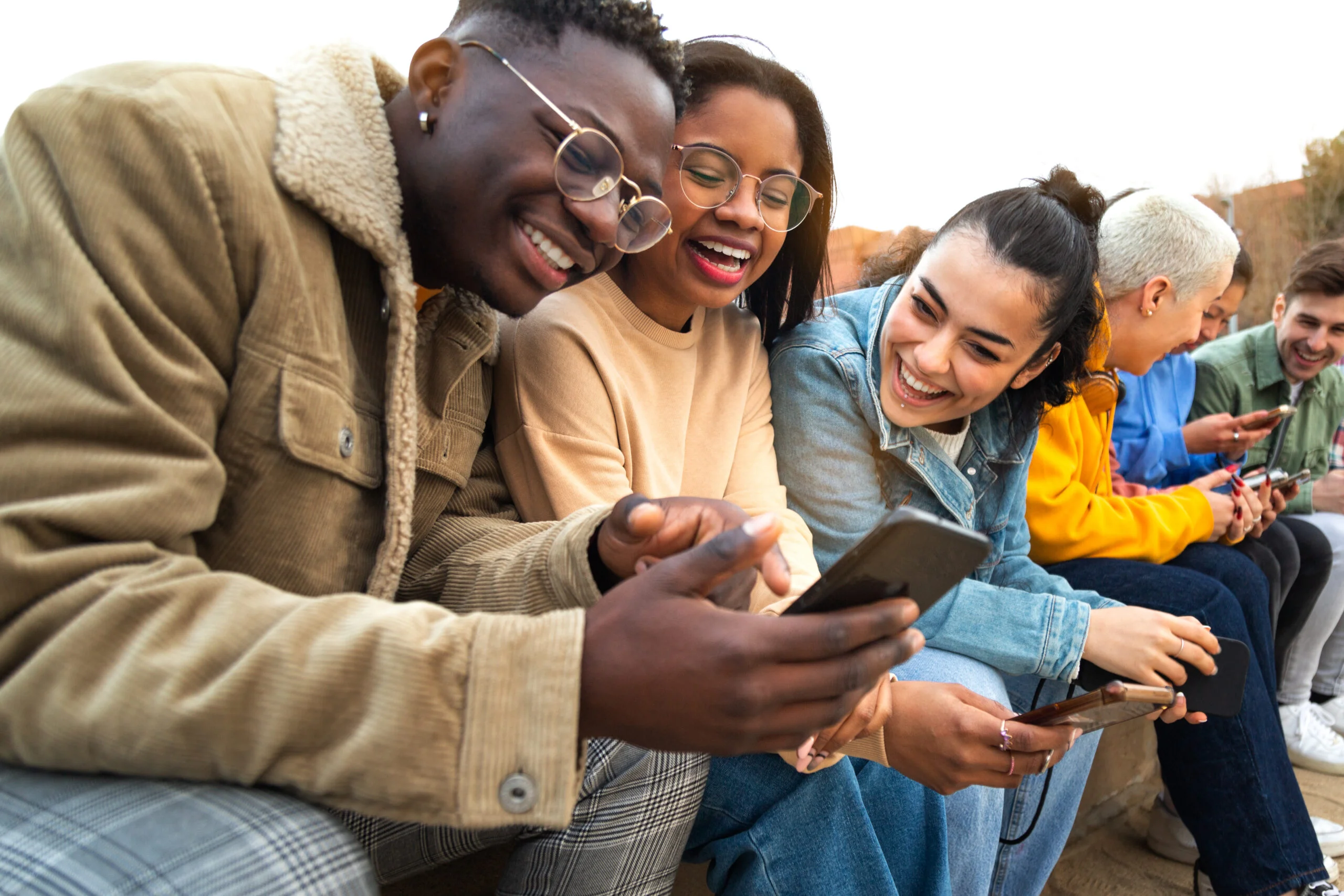
Watching a Gen Z teenager search online today is… unsettling. Not because they are doing it wrong. Just differently. They do not search the way we used to. They do not put a question to Google hoping for a neatly ordered answer. They wait. For it to land in their feed. A video, a review, a snippet that catches their attention.
They type nothing. Or almost nothing. They scroll. They tap on a sound, an image. They feel. That is how information gets through. It is no longer searched for. It is experienced, absorbed, frictionless.
So no, this is not a generational whim. It is a different relationship with the web. Less linear, more sensory. And above all, far more spontaneous.
What does that change for us? Everything. If we carry on writing for a search engine that is no longer their front door, we are talking into the void. We line up content nobody will ever see. Or not the people we are aiming at.
Google is no longer the starting point
The shift is not necessarily visible in the figures. Not yet. Google remains dominant, on the surface. But underneath, reflexes are changing. Young people no longer google “how to make a risotto”. They type that into TikTok. Or they watch a reel. Or they ask a YouTuber they trust. Not because they hate Google. Simply because elsewhere it is simpler, more direct, more alive.
We are no longer talking about a niche phenomenon. When 46% of Gen Z adults in the United States say they prefer searching on a social network rather than on a search engine (April 2024 survey relayed by Statista), that is no longer a trend. It is a displacement. A shift in the centre of gravity. And with it, a whole slice of SEO becomes… blurred.
The rules of the game have changed
Blurred, because the rules keep changing. The algorithm is no longer Google’s, but TikTok’s. Instagram’s. YouTube’s. Platforms that do not read title tags. That take no interest in your internal linking. That want pace, a hook, visuals. Instant gratification.
So what do we do, as a brand, a publisher, an agency? Do we panic? No. We listen. We observe. And above all, we stop imposing old patterns on new habits.
Creating content designed for the platforms
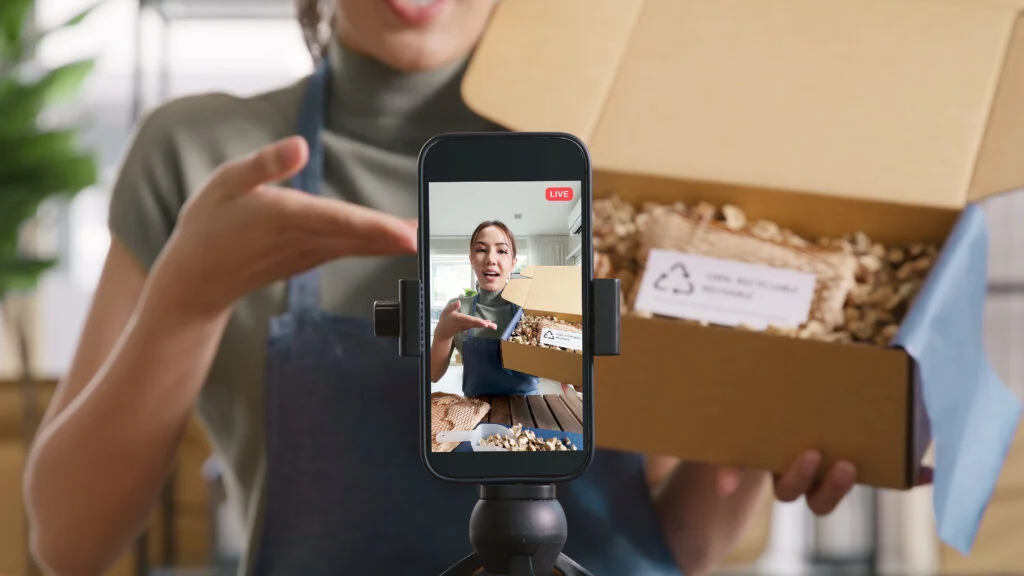
You have to unlearn. Rethink what we call “optimisation”. On TikTok, for example, there is no link. No page. Just a video. Thirty seconds, sometimes less. That is where everything has to happen. A hook. An emotion. A clear intention. And then the algorithm does the rest. If it works, it spreads. If not, it dies in silence.
On Instagram, the same logic applies. Visibility is earned through engagement, not through indexing. Shares, comments, reposts. Those are the relevance signals. Not a neatly structured H1-H2-H3 hierarchy.
YouTube? It is a mix of the two. Long content, but it has to start strongly. Capture attention in the first ten seconds. And above all, create a connection. A voice. A presence. The algorithm recognises loyalty, not just keywords.
Put another way: SEO is not disappearing. It is recomposing itself. It is expanding. It is spilling over. And for anyone still working the way they did in 2018, that is a shock. But for everyone else, it is an opportunity. An enormous one.
Knowing where to put your energy
Provided you know what you are looking for. And where you want to be seen. Because not everyone needs to be on TikTok. It all depends on what you sell. To whom. And how those people discover what they want.
Let us take a typical scenario. An artisan bakery in Fribourg that targets students does not need an optimised blog. It films the bread coming out of the oven at six in the morning, answers questions posted in the comments by video, and sets up a recurring format that regulars look forward to. The message gets through. Not through text. Through the gesture.
Now imagine a gym in Lausanne. It publishes routines filmed by its members, real bodies, exercises you can redo at home. No polished staging. What we observe in cases like this is that the content that gets picked up and shared is rarely the most polished: it is the content in which the audience recognises itself.
Then there is voice. A fiduciary firm in Neuchâtel that receives the same questions about the tax return every spring is well advised to answer them in natural sentences, as they are asked aloud to an assistant. Not for any particular algorithm. Because that is how the question arrives.
What do these three scenarios have in common? They stop producing content in order to rank well. They create formats that circulate. That get passed on. That take root in habits, not in keywords.
That is where the real SEO of today is decided. Not in dashboards. In feeds. In voices. In the thumbs that stop on a screen.
Online search and Generation Z: what it changes for a French-speaking Swiss SME
Let us keep things in proportion. In February 2024, Gartner predicted that the volume of traditional search engines would fall by 25% by 2026, in favour of AI chatbots and other virtual agents. That deadline has arrived, and Google has not left the Swiss landscape: according to StatCounter, it held 81% of the search engine market in Switzerland in October 2026, far ahead of Bing (nearly 12%). For a French-speaking Swiss SME, the question is therefore not whether to leave Google, but where its target audience discovers what it buys.
If you sell to people under thirty, clothing, a leisure activity, a restaurant table, TikTok, Instagram and YouTube deserve a real place in your plan. If you sell services to businesses, the buyer is most often an adult who compares options, and Google keeps the leading role, with professional networks in support. This trade-off is detailed in our comparison of SEO and social media in B2B.
That leaves search in AI assistants, which affects every generation. According to Google’s documentation, no special optimisation is needed to appear in AI Overviews or AI Mode: SEO best practices remain valid. We draw a simple conclusion from this. A clear, up-to-date, crawlable site serves Google, the assistants and the visitor arriving from a video alike.
Adapting your strategy, without falling into caricature
For those who want to take their strategy further, there are a few directions worth exploring. Not magic recipes, no. But solid leads.
- Think platform first. No longer engine. Create for TikTok, for Insta, for YouTube. With their codes. Their language.
- Work on the hook. Every piece of content, short or long, has to capture attention in three seconds. Otherwise it is lost.
- Betting on voice. Literally (voice search) and figuratively (tone, rhythm, way of speaking).
- Do not neglect the visual. The image no longer illustrates the point: it is the point. The entry point.
- And above all: give others a voice. Users, clients, ambassadors. Authenticity cannot be manufactured. It is shared.
There it is. No perfect plan. No ten-step strategy. Just a reality to look in the face. And a course to adjust, slowly but surely.