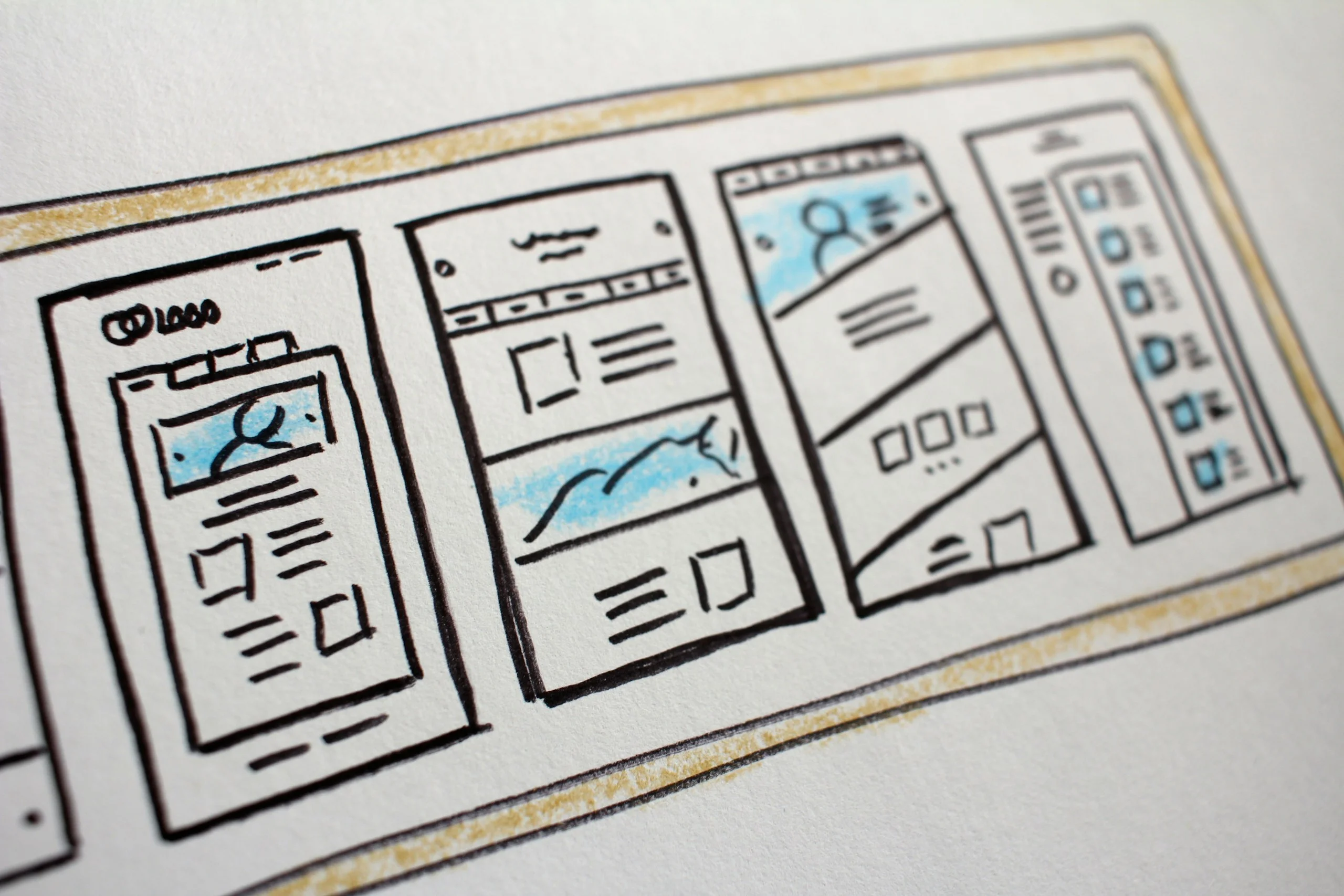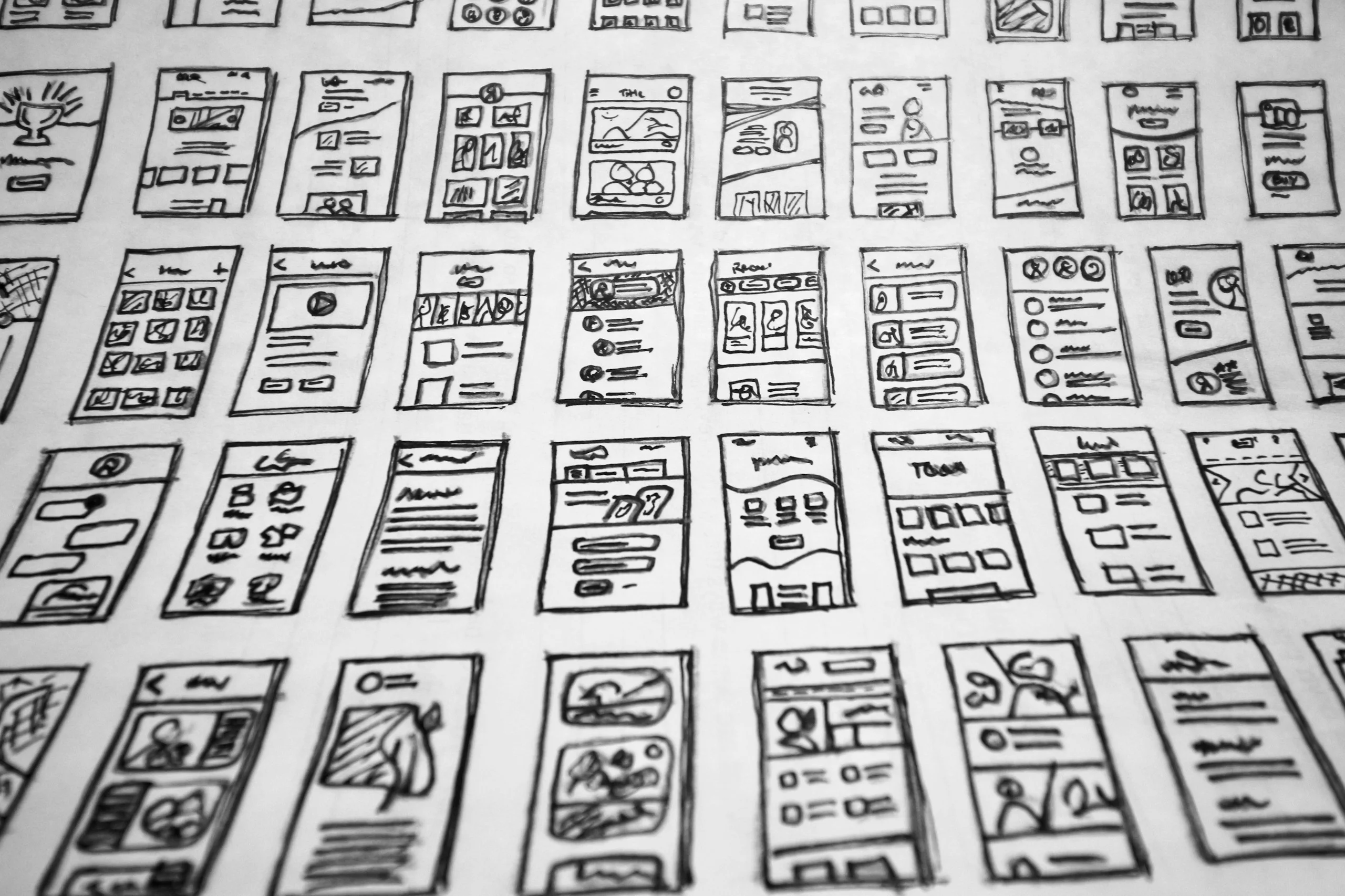
You are ready to launch your company’s digital shop window. Two paths are open to you: building your website yourself, rolling up your sleeves, or handing the keys to a web agency.
On one side, the immediate saving of doing it yourself is appealing. On the other, a professional’s promise of performance is reassuring. But what is the real cost of going it alone? And at what point does external investment become indispensable to your growth?
Here we compare the two approaches on what really matters for an SME in French-speaking Switzerland: the time involved, SEO, the real cost and the site’s ability to evolve. Our view is openly stated, since we are an agency, but “do it yourself” remains the right choice in some cases, and we set them out below.
Building your own website: appealing but time-consuming
For many entrepreneurs, the initial reflex is to think: “I’ll do it myself, it can’t be that complicated with today’s tools.” That is a logical approach, especially in the start-up phase when cash is precious.
The mirage of technical ease
Platforms such as Wix, Squarespace and WordPress promise professional results in a few clicks.
The appeal is immediate:
- Accessibility: attractive ready-made templates.
- Simplicity: an intuitive “drag-and-drop” interface.
- Low initial cost: a free version to get started, then a modest subscription to remove the adverts and connect a domain name.
Operational reality catches up with the entrepreneur quickly, however. What was meant to take a weekend often turns into a project lasting several weeks.
The hidden cost: your time
Time is money. That is the first pitfall of DIY. To customise a template used by thousands of other sites and give it its own identity, you have to start from a blank page.
It is not unusual for an entrepreneur to spend several months reaching a satisfying visual result for a site of around fifteen pages. During that long phase of development, trial and error and graphic adjustments, that is time not spent on business development or client management.
The basic features are simple, but as soon as your needs evolve (online booking, member area, specific functionality), you hit technical walls or extra costs through paid modules.
The organic search trap (SEO)
A beautiful site is useless if nobody finds it. That is often where amateur sites fall down.
The classic mistake? Thinking “product” instead of thinking “customer search”. Take a computer repairer based in Fribourg: their site presents them as an “IT technician”, whereas their potential customers type “computer repair Fribourg”. Their pages describe their trade in their own words, and are unlikely to appear for the searches people actually make.
SEO cannot be improvised. It requires:
- A sound technical structure: loading speed, mobile responsiveness.
- A keyword strategy: understanding search intent.
- Optimised content: writing for the user and for Google.
To put things right, many entrepreneurs have to invest in specific training and rewrite all their copy. That is more time spent making up for an initial lack of SEO expertise, which is essential to a site’s visibility.
Calling in a professional: a strategic investment
Going through an expert (freelance or agency) changes the dynamic. You are no longer spending your time, you are investing your budget to buy skill and speed of execution.
Why delegate?
Delegating the creation of your website usually answers three imperatives:
- Technical limits: you have a precise vision you cannot realise on your own.
- A need for performance: you want a site that converts, not just an online brochure.
- Business focus: you would rather concentrate on your zone of genius (your business).
What the expert brings: beyond the code
A professional does not just assemble pages. They bring an overall vision of the customer journey.
An effective site has to capture the visitor, hold them and prompt them to act. That means thinking about ergonomics (UX design) and about how information is structured. What seems clear to you as an expert in your field is not necessarily clear to your prospects.
A professional will help you:
- Defining a coherent visual identity that inspires trust (the branding).
- Structuring your pages to maximise conversions.
- Setting up analytics tools (Google Analytics, Search Console) from the outset.
On budget, the gap with “do it yourself” is real, but it can be known in advance. In Switzerland, a professional brochure website starts at around CHF 3’000.-, and the amount rises with the number of pages, languages and features: we have detailed these ranges, type of site by type of site, in our article on the price of a website in Switzerland. To make two quotes genuinely comparable, the most useful step remains to draw up a specification, even a short one: site objectives, expected pages, features, content you supply and content to be produced. This document is what prevents surprises along the way, far more than negotiating the final price.

Comparison: which approach for your growth?
To help you decide, let us look at the two options through the lens of profitability and performance.
1. Efficiency and time
- DIY: a very high investment of time. A slow learning curve. A risk of burning out before you even launch.
- Pro: fast launch. You stay focused on your core business while the site is being produced.
2. Cost analysis
- DIY: low financial cost at the start (hosting, theme), but a high opportunity cost (your hourly rate x the number of hours spent). Hidden costs (training, additional modules).
- Pro: a significant upfront investment, but a predictable, controlled cost. No hidden monthly fees if the site is well built (maintenance aside).
3. SEO performance
- DIY: often an uncertain result. A risk of damaging technical errors (broken links, heavy site, poor indexing).
- Pro: the site is built “SEO-friendly” from the ground up. The foundations are sound for building your future visibility.
4. Customer experience (UX)
- DIY: a tendency to copy standards without understanding the psychology of the buyer.
- Pro: a smooth user journey designed for conversion. A unique design that strengthens your brand image.
SEO: optimisation is never finished
Whether you build your website yourself or pay an agency, there is one universal truth: the work does not stop when the site goes live.
The myth of the “turnkey site that ranks by itself” is dangerous. SEO requires regular follow-up. Your competitors move, Google’s algorithms change, and your content has to stay alive.
For an SME, a monthly review is enough in most cases, provided it is actually held. We recommend going through three things:
- Competition: have your rivals overtaken you on your strategic keywords?
- Technical health: is your site still fast and secure?
- Online reputation: who is talking about you (backlinks)?
If you outsource the build, make sure you have the ability (or a maintenance contract) to make these ongoing adjustments. If you are going DIY, block out this monitoring in your calendar, once a month.
Find your balance
So, the verdict?
In the long run, building your own site can prove worthwhile for some entrepreneurs, but it demands substantial effort and a real investment of time. Many find that a hybrid solution, combining professional support with self-management, helps avoid the main pitfalls while keeping control of their digital tool.
For entrepreneurs and decision-makers, here is the golden rule: assess your real resources.
- Go DIY if: your budget is close to zero, you have plenty of free time, a genuine appetite for the technical side, and your site is not your main acquisition channel in the short term.
- Hire a professional if: your time pays off better elsewhere, you need results quickly, or your site is the central engine of your revenue.
If you are starting out with a small budget, a hybrid approach can make sense: entrust the structure and the basic SEO to an expert for a simple brochure website (“One Page” or 5 pages), and ask for training so you can manage the content yourself. You will avoid beginner mistakes while keeping control of your tool.
FAQ on web design
What skills do you need to build your own website?
They are broader than people think: you need some grounding in graphic design, a technical understanding of the CMS, the tool that runs the site (WordPress, Wix and the like), web copywriting skills, and a good command of the basics of SEO.
What are the major risks of doing it yourself?
The main risk is invisibility: a technically shaky site will never rise on Google. The second risk is brand image: an amateur design can drive away prospects who will doubt your professionalism.
Does a professional guarantee first place on Google?
No, and be wary of anyone who promises it. A professional lays sound foundations, technical and editorial: that is all they can honestly commit to delivering. Ranking then depends on your content strategy and on the competition in your market.
3 tips for making the right decision
- Work out your hourly rate. If you spend 100 hours on your site and your hour is worth CHF 100.-, your “free” site cost you CHF 10’000.-. Does that add up?
- Audit your own skills. Be honest. Can you create brand guidelines? Do you know what an H1 tag or a meta description is?
- Think about scalability. Will your DIY solution support your growth in 2 years? Migrating an amateur site to a professional solution often costs more than doing it properly from the start.