Which SEO tactics should your SME prioritise? Search is evolving with AI-generated answers, but your visibility also relies on practical foundations: useful content, an accessible website and a consistent local presence.
For an SME in French-speaking Switzerland, ignoring these changes is not only a technical risk, it is a commercial risk. Your visibility directly conditions your inflow of qualified leads and, ultimately, your revenue in CHF.
You may feel that SEO has become an overly complex black box. Yet the fundamentals remain within reach if you know where to look. Here are 7 actionable levers for adjusting your strategy, optimising your WordPress site and giving your company the means to stay visible in this new ecosystem.
1. AI in the SERP changes the game
Google is increasingly placing AI-generated answers directly at the top of search results (AI Overviews, formerly SGE). Since October 2025, it also offers AI Mode in Switzerland, in French, German and Italian: a separate tab where the AI breaks the question down, queries several sources and writes a single answer, with only a few links on the side. In practice, this means users often get their answer without even clicking through to a website. For businesses this can seem frightening, but it is an opportunity for positioning.
To exist in these AI-generated summaries, your content must be the source of the answer. The days of vague 2,000-word blog posts that beat around the bush are over. AI looks for facts, figures and direct answers.
Immediate action: structure your content to answer your prospects' questions precisely. Use clear “Question / Answer” formats. If you sell management software in Lausanne, a page that clearly answers “What does an ERP cost in Switzerland?” is far more likely to be picked up by AI than a generic page about your services.
FURTHER READING: SEO trends 2026: the strategic guide for French-speaking Swiss SMEs
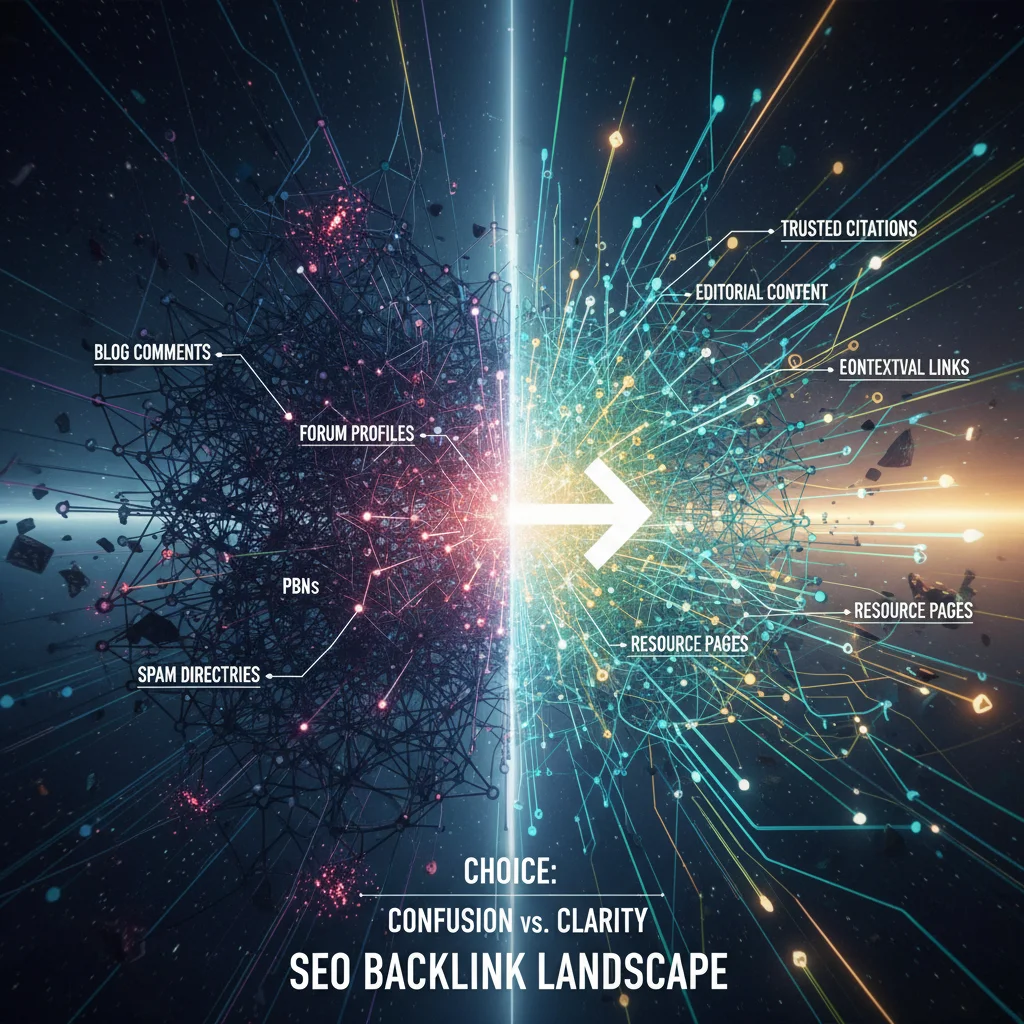
2. Brand signals are the new backlink
For a long time, the number of links pointing to your site (backlinks) was the holy grail. Today, Google is trying to work out whether you are a genuine company, reliable and recognised. That is what we call brand signals.
The search engine favours entities it can verify. An SME active on social media, which receives customer reviews and is talked about in the local press in French-speaking Switzerland, will be favoured over an inert “brochure” site, even if the latter is well optimised technically.
Practical tip: do not silo your marketing. Your offline activity (events, local sponsorship) and your presence on LinkedIn should feed your SEO. Make sure your company name, address and telephone number are consistent everywhere on the web. That consistency is what builds algorithmic trust.
3. Writing “AI-ready” content
Artificial intelligence does not read like a human. It scans, it analyses structure and it looks for named entities. “AI-ready” content is content that is easy for robots to digest, and which is then better served to humans.
That does not mean writing like a robot. On the contrary, it means signposting your expertise very clearly. Use structured data, bullet lists and comparison tables.
Expert tip: if you publish a case study, do not stop at storytelling. Include a summary box with the figures (e.g. project timeline, volume handled, indicators tracked). That data is manna for algorithms looking to extract factual information.
4. Technical adjustments on WordPress
WordPress powers a large share of websites in Switzerland, but it can become a monster if it is badly configured. Technical performance is no longer optional, it is a prerequisite for ranking.
Loading speed also affects your conversion rates: a visitor waiting in front of a page that will not display has every reason to leave for the next result.
What to check on your CMS:
- SEO extension: do you use Yoast or RankMath? Are they properly configured or left on the defaults?
- Images: are your visuals compressed? Images of 2 MB weigh down every page and slow down display on mobile.
- Caching: a caching plugin is essential for serving your pages quickly.
5. Mobile-first indexing is the norm
Google now indexes the mobile version of your site first. Since 5 July 2024, Google crawls and indexes sites with its smartphone crawler only, and content that is entirely inaccessible on mobile can no longer be indexed. A site that looks magnificent on a 27-inch desktop screen but is simply hard to read on an iPhone is still indexed, but it is that less convincing mobile version that Google evaluates and that your prospects see.
The mobile user experience (UX) must be smooth. Buttons must be clickable without zooming, and text readable without effort.
The thumb test: pick up your smartphone and browse your site. Is it easy to find your telephone number and call you in one tap? If not, you are losing opportunities every day. Simplify the navigation for the user on the move.
6. Local SEO tactics to reach your customers
For an SME in French-speaking Switzerland, fighting over generic global keywords is a waste of time and money. Your battle is fought here, in French-speaking Switzerland. Local SEO is a direct lever for reaching clients looking for a provider close to them.
An optimised Google Business Profile listing (formerly Google My Business) is crucial. It lets you appear on Google Maps and in the “local pack” at the top of the results.
Local strategy:
- Include geographic keywords in your titles (e.g. “Fiduciary in Geneva” rather than “Accounting services”).
- Actively collect customer reviews: according to BrightLocal (2025), 42% of consumers trust them as much as a personal recommendation. Reply to every review, even negative ones, to show your professionalism.
- Create dedicated pages if you have offices in several cantons (Vaud, Valais, Neuchâtel, and so on).
On the Riviera, our web and SEO services for businesses in Vevey distinguish website creation, improvements to an existing site and ongoing SEO. This helps you choose an intervention that addresses the actual problem, rather than defaulting to a complete redesign.
7. The technical health of your site
Technical SEO is the mechanics under the bonnet. You can have the finest bodywork (content), but if the engine is broken, you will not move forward.
It is about making sure Google can crawl and index your pages without obstacles. 404 errors (pages not found), redirect chains or security issues (HTTPS) send negative signals.
Regular maintenance: think of it as servicing your car. Use tools such as Google Search Console to identify indexing problems. Fixing an indexing error promises no ranking, but it is the condition for the affected pages to be able to appear in the results again.
Visibility, validation, verification: the triptych of post-AI SEO
Activating these levers is good. Measuring the right signals is better. On a web filtered by AI, raw visibility (impressions, positions, clicks) no longer tells the whole story. Three dimensions now stack up:
- Visibility: your rankings, your impressions and your organic clicks. The foundation, but no longer the end goal.
- Validation: being cited by ChatGPT or Perplexity, mentioned in the French-speaking Swiss press, recommended by third-party sources. This is the new form of authority.
- Verification: real engagement, quote requests, the human signals that show your content genuinely serves your prospects.
The published data points in the same direction. According to SparkToro’s 2024 zero-click study, carried out with Datos, 58.5% of Google searches in the United States and 59.7% in the European Union already ended without any click. For its part, Ahrefs reran its analysis of 300,000 keywords in February 2026: the presence of an AI Overview is associated with a click-through rate 58% lower for the page ranked first, compared with 34.5% in its first edition in April 2025. The question is no longer just “how do we appear?” but “why deserve to be picked up?”
Staying one step ahead
SEO is not a one-off action, it is a company culture. By activating these 7 levers (from adapting to AI through to precise local linking) you build a durable asset for your company.
Do not let the technical side overwhelm you. Start by auditing your current situation, then implement these changes step by step, on your own or with SEO support. In a demanding Swiss market, it is this consistency that counts, far more than a one-off stunt.
To find out which levers to start with on your site, we can discuss it in a first conversation.
Sources
- Google: Search Console
- BrightLocal: Local Consumer Review Survey 2025
- Blick: Google’s AI Mode is coming to Switzerland (in German)
- Google Search Central: end of the transition to mobile indexing (in English)
- SparkToro: 2024 study on zero-click searches (in English)
- Ahrefs: AI Overviews and click-through rate, 2026 edition (in English)
- Ahrefs: AI Overviews and click-through rate, 2025 edition (in English)