

When ChatGPT, YouTube and social media turn customers… into fake experts
There was a time, not so long ago, when going to see an agency was above all a matter of trust. You came looking for a point of view. A reading of the ground. Expertise built through experience, perspective, trial and, yes, failure.
That era is disappearing.
Not through a technological revolution. Through a change of stance.
In just a few months, a whole generation of entrepreneurs has turned to artificial intelligence the way you would hold a microphone out to an oracle.
Not to learn. To validate what they already want to believe.
A well-turned prompt, a YouTube video with a voice-over, a LinkedIn carousel in bright colours, and answers start arriving. Brilliant. Fluent. Ready to use.
📲 “How to earn €10,000 a month with an AI automation agency.” 📲 “The perfect sales funnel in 3 steps thanks to ChatGPT.” 📲 “Top 10 prompts to scale a business without a team.”
And when these people turn up at an agency, it is no longer to ask a question. It is to test how well the agency lines up with what they have already been told.
💬 “I should warn you, I asked ChatGPT before coming.”
And the agency knows the discussion is not starting from scratch. It starts with an answer that will have to be unpicked.
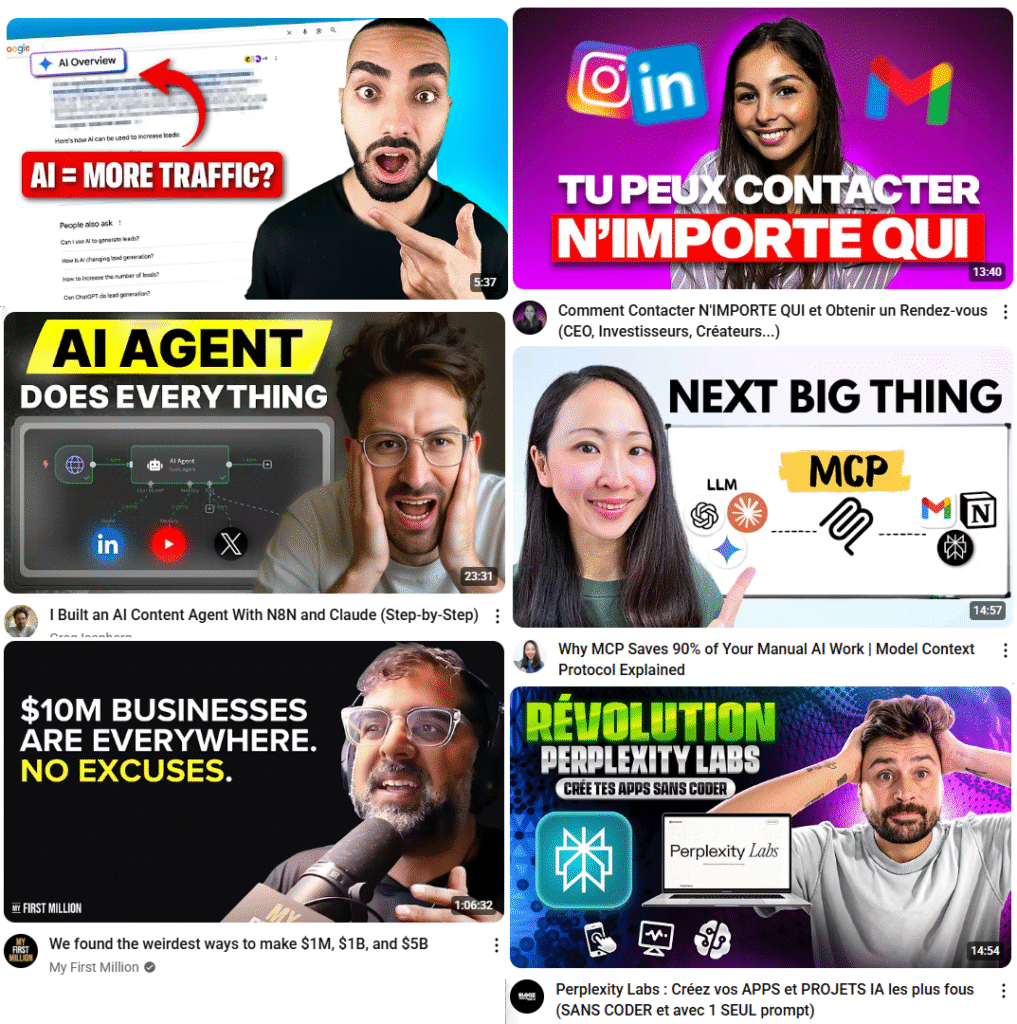
The rise of the AI-expert customer
At Smart Impact, we support projects across three dimensions that interweave more than they stack: marketing, communication, development. We are a 360 agency, and in our daily work that means juggling multichannel strategies, business-specific code, high-value content and technical stacks that are sometimes shaky and have to be consolidated without breaking everything.
We are used to vague briefs, moving objectives, urgent requests and long-term visions. That is not a problem, it is the job. What we do see changing is the client’s stance towards expertise.
Today, people no longer ask what we think. They ask why we do not think like ChatGPT.
Can you feel the nuance? It is no longer a request. It is a test.
Knowledge without understanding
We do not criticise the use of artificial intelligence. We use it every day. It is part of the toolbox. We build it into our processes, we explore it, we question it. It is not a gadget, it is a lever.
But using AI and following it blindly are not the same thing.
ChatGPT gives structured, clean, reassuring answers. It rephrases with style and lines up concepts brilliantly. It gives the illusion of reasoning, when most of the time it is a language statistic dressed up as truth.
And that is where the trap lies. It is not the answer that is wrong. It is the context that is missing.
You ask a question. You get a brilliant sentence. But you do not know where it comes from, what it rests on, whether it holds up against reality.
You get an opinion. You think you have understood. But in reality, you have just read an elegant rephrasing of something you do not master.
You do not become a strategist by reading a prompt
This is not a criticism. It is an honest reminder.
Yes, you can learn. Yes, you can explore. It is even essential. But no, you cannot turn yourself into an expert just because you received a well-phrased answer.
Between advice generated in three seconds and a viable, deployable, secure solution that can be integrated into a real environment… there is a world of difference.
That world is ours. The one we walk through every day. And the one we sometimes have to defend, against an answer that does not hold up. But which, to the client, looked perfect.
✨ It looks shiny, but it breaks. And we are here to make it hold.
Expertise cannot be improvised
An agency is not there to tick the boxes of a plan validated by an AI. It is there to ask the right questions. To confront ideas with reality. To translate an intention into a concrete, durable, controlled solution.
And that work cannot be summed up in a prompt. It is not just about knowing what to do. It requires understanding why to do it. When. How. With what limits. And for whom.
Expertise is not a compilation of answers. It is an ability to read between the lines. To sense when something is stuck. To choose when to give up.
You do not call on an agency to validate an idea. You call on it to grow the idea, or to bury it if it does not hold up.
And that is something ChatGPT will never tell you.
We work with reality
In a project, there is the theory, and then there is everything else.
💣 The server that crashes during a campaign 💣 The CRM that changes its API without warning 💣 The funnel that stops converting without anyone knowing why 💣 The budget that has to be reframed at the last minute
That is where we work. Behind the scenes. In the blind spots. In the grey areas.
We know the work. Not only the agency’s work. The work of the entrepreneur, the e-tailer, the restaurateur, the consultant, the CEO trying to stay upright while steering a brand, a team, a product and an image.
And that is something no model can simulate.
🤖 AI takes shortcuts. 🏗️ Reality demands foundations.
You do not turn a donkey into a racehorse
The wording is harsh. But it is necessary.
The illusion that everyone can do everything with the right tools has become a collective fantasy. As if competence could be born from a well-executed copy-paste. As if a good tool were enough to make you good.
But a tool does not create intent. Still less understanding.
Today, a certain segment of clients thinks ChatGPT has made them brilliant. But repeating an answer is not the same as having understood it. And knowing a method is not enough to master it.
Being brilliant is not saying “you need funnel automation”. It is knowing when definitely not to do it. And why.
What now?
So what do we do with all this?
You could get annoyed. Send clients back to their prompts. Let ChatGPT run the projects. But that would be missing our role. Because our job is not just to do it instead of them. It is to explain, to frame, to translate complexity into something actionable.
Yes, we can work with AI. Yes, we can build in automations. Yes, we can support the implementation of an idea conceived beforehand.
But on one condition.
👉 Agreeing to test the plan against reality 👉 Not against ego 👉 Against feasibility
Otherwise, it will not be a project. It will be an illusion that costs time, money and credibility.
Because in the end, it is the client who carries the consequences. And AI will not turn up to help clean up the mess.
In the end, AI is not an oracle
ChatGPT is an incredible tool. But it is not a strategic partner. It is not an architect. It is not a marketing director. It is not a developer. It is not a project manager. It is not a human being.
It is a synthesis engine.
Asking ChatGPT questions? Fine. But first, ask yourself this one: am I able to evaluate the answer?
Because otherwise, you move forward with a brilliant sentence… And no idea where it leads.
So yes, AI can help us move faster. But if we do not know where we are going… we drive straight into the wall.
And unfortunately, we see it more and more.
💬 Working with an agency? It means coming with ideas 🧠 Not with certainties 👣 And above all, leaving a little room for experience. It still has two or three things to pass on