
Do you have a local business, a physical shop or a defined catchment area?
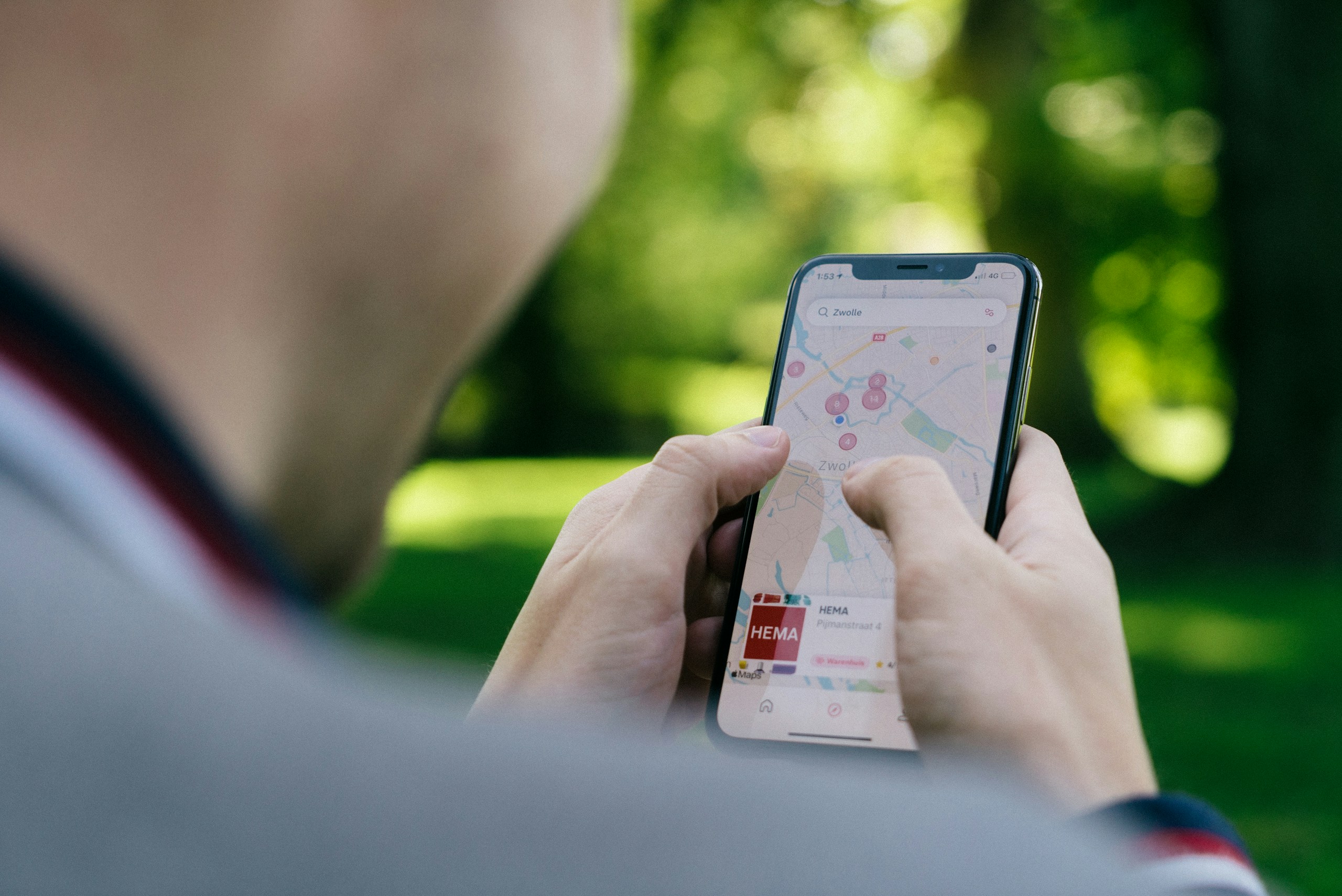
So you know that the battle for visibility is not fought only in the classic search results, but above all on the map.
Appearing in the “Local Pack” (the first three Google Maps results) is not a matter of luck. It is a matter of method.
For SMEs, it is often the most underestimated growth lever, even though it is the one that generates the most qualified “ready to buy” traffic. Indeed, 76% of people who run a local search on their smartphone visit a shop the same day.
Today we offer you an operational, pragmatic checklist to audit your local SEO, optimise your Google Business Profile listing (formerly Google My Business) and dominate your local market.
1. Google Business Profile: your number 1 shop window
Before you even think about your website, your absolute priority is your Google Business Profile (GBP) listing. It is often the first (and sometimes the only) point of contact between your business and a local prospect.
Claim and verify your listing
It seems obvious, but many companies overlook this fundamental step. If you do not own your listing, you cannot manage it. Make sure nobody else (a former agency, for instance) has control of it.
The accuracy of the NAP data (Name, Address, Phone)
Consistency is the keystone of local search. Google cross-references the data. Your NAP has to be strictly identical everywhere on the web.
- Name: use your real trading name. Do not add artificial keywords (e.g. “Cheap Lausanne Plumber”) if that is not your legal name. Google penalises the practice.
- Address: it has to match exactly the one on your website and in the local directories.
- Phone: favour a local number (021, 022, etc.) rather than a premium-rate number or a mobile: it strengthens your geographic anchoring in the eyes of the algorithm.
Categories: be specific
Google lets you choose one primary category and secondary categories.
- Primary: this is the most influential ranking factor. Be as precise as you can. If you are a “Pizzeria”, do not just choose “Restaurant”.
- Secondary: add every relevant category (e.g. “Pizza delivery”, “Italian restaurant”).
Optimise the description
You have 750 characters. The first 250 are crucial because they are visible without clicking “more”. Work your main keywords and your town in naturally, but write for the human: what is your value proposition? What sets you apart?
2. The website: the local anchor of your digital presence
Your GBP listing does not live in a vacuum. It has to be supported by a website optimised for local search. Google analyses your site to confirm the relevance of your Maps listing.
Creating dedicated local pages
If you have several locations or serve several towns, do not settle for a generic contact page. Create a unique page for each location. Each page must contain:
- The NAP specific to this location.
- An embedded Google Maps map.
- Unique content describing the activity specific to that area.
- Testimonials from local clients.
On-page optimisation for local
Your title tags and meta descriptions should state clearly where you are and what you do.
- Example title tag: Estate Agency in Geneva 6th | [Agency name]
- H1: should include the main keyword plus the city.
- Content: mention local landmarks, districts or local events to put your business in context.
Schema.org markup (LocalBusiness)
It is the language Google understands best. Adding “LocalBusiness” structured data to your site helps search engines identify your contact details, opening hours and location without ambiguity. It is a strong technical signal for local SEO.
3. Customer reviews: the engine of trust and conversion
As we saw in our earlier articles on online reputation, reviews are the crux of the matter. They affect both your ranking (SEO) and your click-through rate (CTR).
Velocity and consistency
Having 50 reviews dating from 2019 is less powerful than having 10 new reviews every month. Google favours active profiles. Put in place a systematic process to ask your satisfied customers (post-purchase email, in-store QR code, SMS).
Reply to every review
Yes, all of them. The positive ones and the negative ones.
- Replying to positive reviews: this is the chance to (subtly) place keywords and build loyalty. “Thank you for buying your electric bike at our Bordeaux shop“.
- Replying to negative reviews: this shows future prospects that you are professional and that you care about customer satisfaction. A constructive reply can turn a detractor into a promoter, or at the very least reassure third-party readers.
Should you include keywords in reviews?
You cannot write the reviews for your clients. But you can guide them. Instead of asking “Leave us a review”, ask “What did you think of the kitchen renovation we carried out for you?”. That prompts the client to use terms specific to your service in their comment, which is excellent for semantic SEO.
4. Local citations and authority
Google needs third-party evidence to confirm that your business is legitimate and really located where you say it is.
Consistency of citations
A citation is a mention of your company (NAP) on another site, even without a link. Make sure you are present on:
- The major general directories (Local.ch, PagesJaunes, Yelp, TripAdvisor where relevant).
- Local directories (the town council website, the tourist office, trade associations).
- Sector directories (OneDoc for doctors, TheFork for restaurants, and so on).
Careful: quality matters more than quantity. Being listed in a spam directory can harm you. Favour sites with real local authority.
Local backlinks
Getting links from local sites is extremely powerful.
- Partnerships with other local retailers (non-competing).
- Sponsoring local events or sports associations.
- Articles in the local online press.
5. The mobile user experience (UX)
Local SEO is intrinsically tied to mobile. The majority of “near me” searches happen on the move.
Speed and ergonomics
If a user clicks your link from Maps and your site takes 5 seconds to load, they will leave. Google will see it (pogo-sticking) and downgrade your site, which will end up affecting your local visibility. Your site has to be Mobile First.
Clear calls to action (CTAs)
Mobile users are in a hurry. They want an immediate answer. Your “Call”, “Directions” and “Book” buttons must be visible without scrolling. Make conversion as easy as you possibly can.
Local SEO is a marathon, not a sprint
Positioning yourself on Google Maps takes rigour and consistency. It is not about “tricking” the algorithm, but about giving Google the trust signals it needs to recommend you to its users.
To recap your immediate action plan:
- Audit and clean up your Google Business Profile listing.
- Check that your information (NAP) is consistent everywhere on the web.
- Put in place a proactive review collection strategy.
- Optimise your local pages on your website.
Do not let your competitors gain the upper hand on your own territory. The local market is often the most profitable, because the acquisition cost is lower and loyalty comes more naturally.
And you: what is the biggest difficulty you face today with your local SEO?
🚀 Discover Smart Impact’s services, our 360° digital agency in Switzerland.