
As a business owner, you observe a troubling paradox within your most capable teams: their performance is increasingly undermined by an insidious exhaustion, despite constant commitment. This phenomenon has a name, cognitive fatigue, and it sets in long before anyone thinks to complain about it.
In the morning, everything is fine. But by the end of the day, the problems pile up:
- The sales manager, normally so organised, sends a quote to the wrong person or forgets to follow up a key prospect.
- The communications manager, an expert in brand strategy, makes a factual error in a newsletter headline or misses a critical deadline for publishing a piece of content.
- The executive assistant, meticulous by nature, finds herself unable to sort through her emails or draw up a clear schedule after 4 pm.
- Even for you, irritability rises, decisions take longer, and simply opening a new tab on screen becomes a chore.
These symptoms are not isolated coincidences.
They signal an exhaustion far deeper than physical tiredness.
They reveal a pervasive phenomenon in the digital workplace: cognitive energy overload. The brain, constantly solicited by notifications, forced multitasking and the complexity of tools, reaches its breaking point.
To help you recognise and effectively fight this burden, it was essential to give it a name. That is why, at Smart Impact, we chose to coin a new word: cognifatigue.
Definition:
Cognifatigue (noun): a state of mental overload caused by the excess of stimulation, decisions and concentration imposed by the digital environment. This is not “simple stress”, but wear on our most limited and most strategic resource: our capacity to think.
Let us now unpack the causes of this cognitive fatigue and look together at the solutions that exist for making cognitive energy the engine of your teams’ productivity again, rather than the brake.
The anatomy of cognitive fatigue: the brain under pressure
Cognifatigue is not a weakness.
Science is only beginning to measure the damage. A preliminary study from the Massachusetts Institute of Technology (MIT) even speaks of “cognitive debt”.
It is the logical consequence of a working environment that demands too much of our brain. Our cognitive energy is a limited resource, like a phone battery. Once drained, the only solution is to recharge.
To understand how our battery drains, let us look at the three main overload mechanisms at work every day in the digital world:
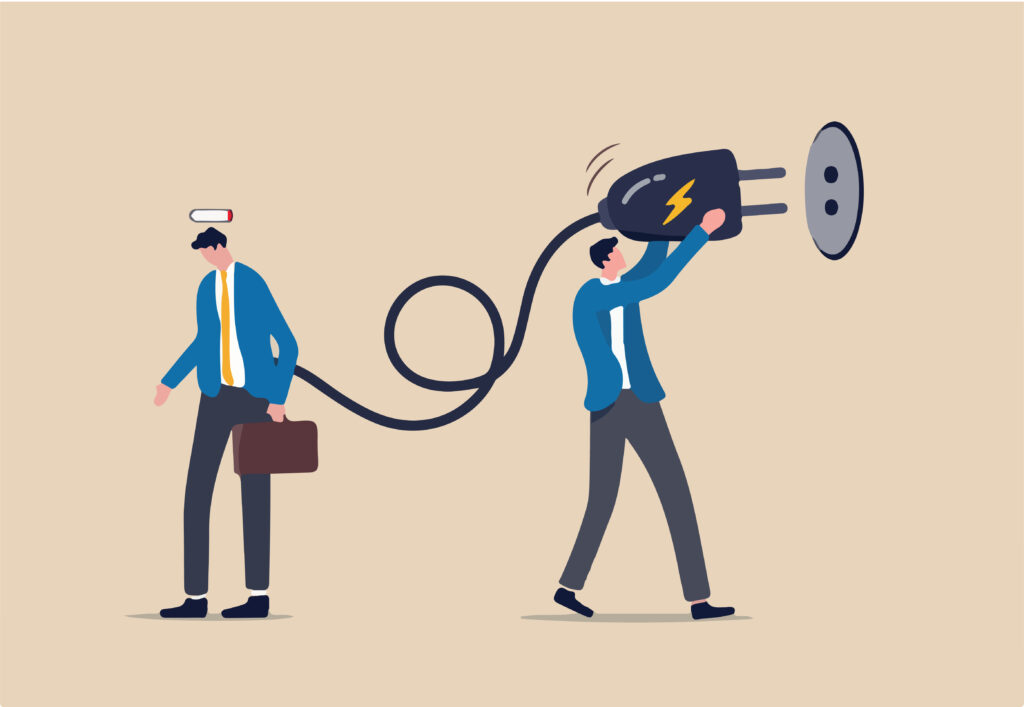 Cognitive overload drains our brain’s battery.
1. The dictatorship of openness and urgency
According to a survey by ObSoCo, the Fondation Jean-Jaurès and Arte carried out in December 2024, around a quarter of working people in France say they are affected by information fatigue, a new form of workplace strain.
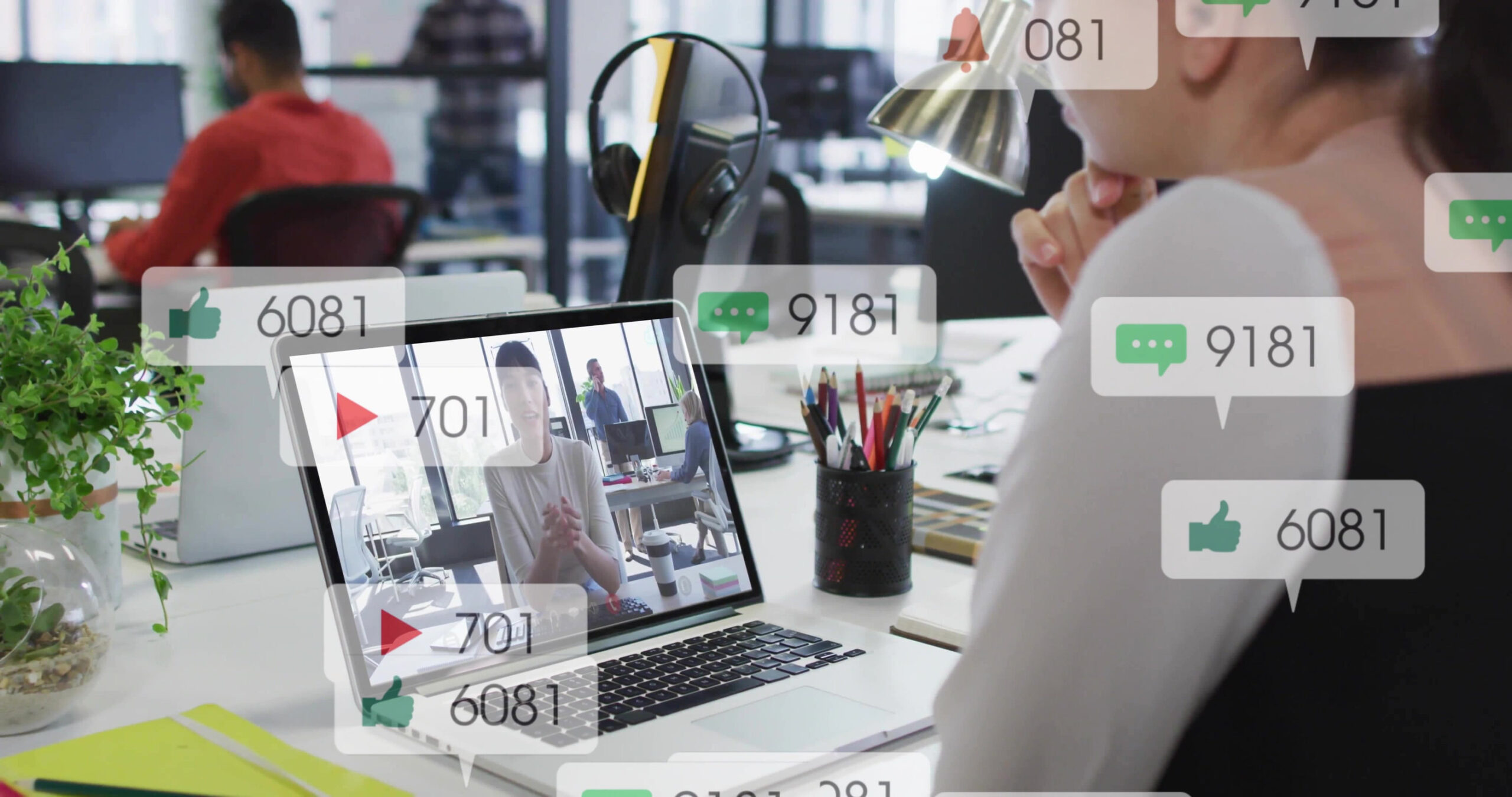
And for good reason: the human brain is designed for sequential concentration (doing one thing at a time). Yet the digital environment imposes perpetual multitasking. Notifications (emails, chats, alerts about * bugs*, meeting reminders) are constant, fragmenting attention into micro-interruptions that look harmless but carry an exorbitant cost.
- The cost of reconfiguration: every time an alert pulls you off a task, your brain spends energy reconfiguring onto the new information, then again to return to the original task. That switching cost is the greatest waste of cognitive energy and the main source of cognitive fatigue. Your staff spend more time managing urgency than producing value.
2. The cognitive load of tools (the digital paradox)
Digital tools (CRM, ERP, collaboration platforms) are supposed to save us time. Yet if they are badly designed, too numerous or poorly integrated, they have the opposite effect. That is the digital paradox.
- The cost of friction: every time an employee has to navigate a complex interface, use three different tools for a single action or work around an unintuitive process, there is mental friction. Energy goes on working out how to use the tool instead of on the productive task itself. Those small frictions add an invisible layer of difficulty that accelerates mental exhaustion.
3. Decision fatigue (the leader’s brain).
In an agile world, everyone has to make micro-decisions at a relentless pace: prioritise this message, delegate that task, choose the right wording for this reply.
- The depletion of willpower: the ability to make decisions and exercise self-control is a cognitive resource that runs down. The more decisions you make in the morning, the more biased your judgements and the more likely your lapses of attention in the afternoon. This decision fatigue is particularly critical among managers and project leads, leading to strategic errors of judgement late in the day.
The business impact: why does cognitive fatigue cost so much?
As Dr Charles R. Chaffin explains in Psychology Today, digital fatigue has many implications at professional and relational level.
We are not talking about an isolated Human Resources problem.
It is a strategic risk that translates into measurable financial losses and an erosion of your company’s capacity to innovate. When your employees’ cognitive energy runs out, it is your profitability that pays the price.
Focus 1: falling quality and rising errors (rework)
Cognitive resource being limited, a tired brain can no longer sustain the same level of vigilance.
- The cost of unexpected errors: the errors we see at Smart Impact are not down to incompetence but to inattention caused by overload. Bad data entered by a salesperson, a missed approval by a project manager, or a miscalculation by an executive assistant. These often basic errors create bottlenecks and multiply the cost of rework.
- A double penalty: not only does the error cost time to correct, but the correction process itself generates more stress and more urgent tasks, deepening the cognitive fatigue of whoever has to fix it. It is a vicious circle that lowers the overall quality of your deliverables.
Focus 2: declining resilience and innovation
To innovate, your brain needs space and quiet to make new connections. But cognifatigue consumes all that available space.
- Fear of change: an exhausted employee no longer has the mental energy to handle uncertainty or ambiguity. The team becomes more rigid, less open to new ideas and resistant to agile methods that require constant adaptation and flexibility.
- Creative blockage: the ability to solve complex problems and develop creative solutions is the first thing to disappear under cognitive fatigue. You end up with capable teams that manage what exists but are unable to imagine the future of your product or service.
Focus 3: absenteeism and turnover (the human cost)
According to the Deloitte Center for Technology, Media & Telecommunications, our digital lives feed technology fatigue and raise real concerns about our well-being (sedentary habits, anxiety, depression, sleep disorders, burnout).
Within a company, chronic cognitive fatigue is a fast and direct route to burnout.
- The effect on health: stress and mental overload are significant drivers of absence. Beyond the days off, the company pays the price of presenteeism, where the employee is physically there but mentally exhausted and ineffective.
- Loss of team memory: if cognitive fatigue leads to turnover, the financial cost is significant (recruitment, training, lost productivity during onboarding). More seriously still, you lose the institutional memory and internal knowledge, slowing the remaining projects further. Managing cognitive energy therefore becomes a key factor in retaining talent and keeping your operations stable.
 *Turn your teams into engines of lasting productivity. *
TO READ: The digital consultant as mediator, the invisible key to successful projects.
Smart Impact: our solutions for cognitive hygiene
Cognifatigue is not inevitable. It is a problem of work architecture that can be solved by protecting cognitive energy, your most precious resource.
At Smart Impact, our expertise lets us identify the most effective levers for restoring a preventive discipline within your organisation.
1. Brain-friendly design
One of the first measures is to tackle the source of the mental friction: the digital environment itself.
- Tool audit: we recommend auditing every platform and workflow to identify the sources of cognitive friction (over-complex interfaces, redundant tools, multi-step processes).
- The principle of simplification: the principle has to be to apply brain-compatible design: simplify the navigation, reduce the number of clicks, and automate every low-value task. Energy has to go on thinking, not on fighting the tool.
2. The architecture of attention (the discipline of rituals)
Multitasking is the greatest waste of cognitive energy. Building in rituals is essential, to create an architecture of attention that favours deep work.
- Communication protocols: set clear protocols: define what email is for (non-urgent information) and what chat is for (minor urgency), to reduce the feeling of permanent urgency.
- Protected time: create periods of “focus time” (or deep work) with no meetings and no notifications, ideally in the morning. These slots are essential to let your staff recharge cognitively and tackle the most complex tasks.
3. Training in emotional leadership
Managing cognifatigue has to start at the top. Managers are the guarantors of their team’s cognitive hygiene.
- Training leaders: it is crucial to train managers to spot the signs of mental overload. They have to learn to manage cognitive load proactively, avoiding overload through better delegation and more realistic prioritisation.
- A culture of calm: management has to value not illusory urgency but the quality of thinking. That means explicitly recognising rest and switching off as essential factors in long-term productivity.
TO READ: Emotional intelligence, the forgotten skill in digital projects.
Cognifatigue is a leadership issue
The days when mental exhaustion could be ignored are over. Managing cognitive energy is the next frontier of sustainable productivity.
Bringing these principles of cognitive hygiene into your organisation is a leadership decision that helps you make your business sustainable. By protecting your teams from cognitive fatigue, you make a strategic investment in quality, innovation and the retention of your talent.
Technological performance is nothing without psychological harmony. It is time to simplify complexity in order to turn emotion into a durable opportunity. Warning: this information is provided for guidance only. For a diagnosis or medical advice, consult a professional..