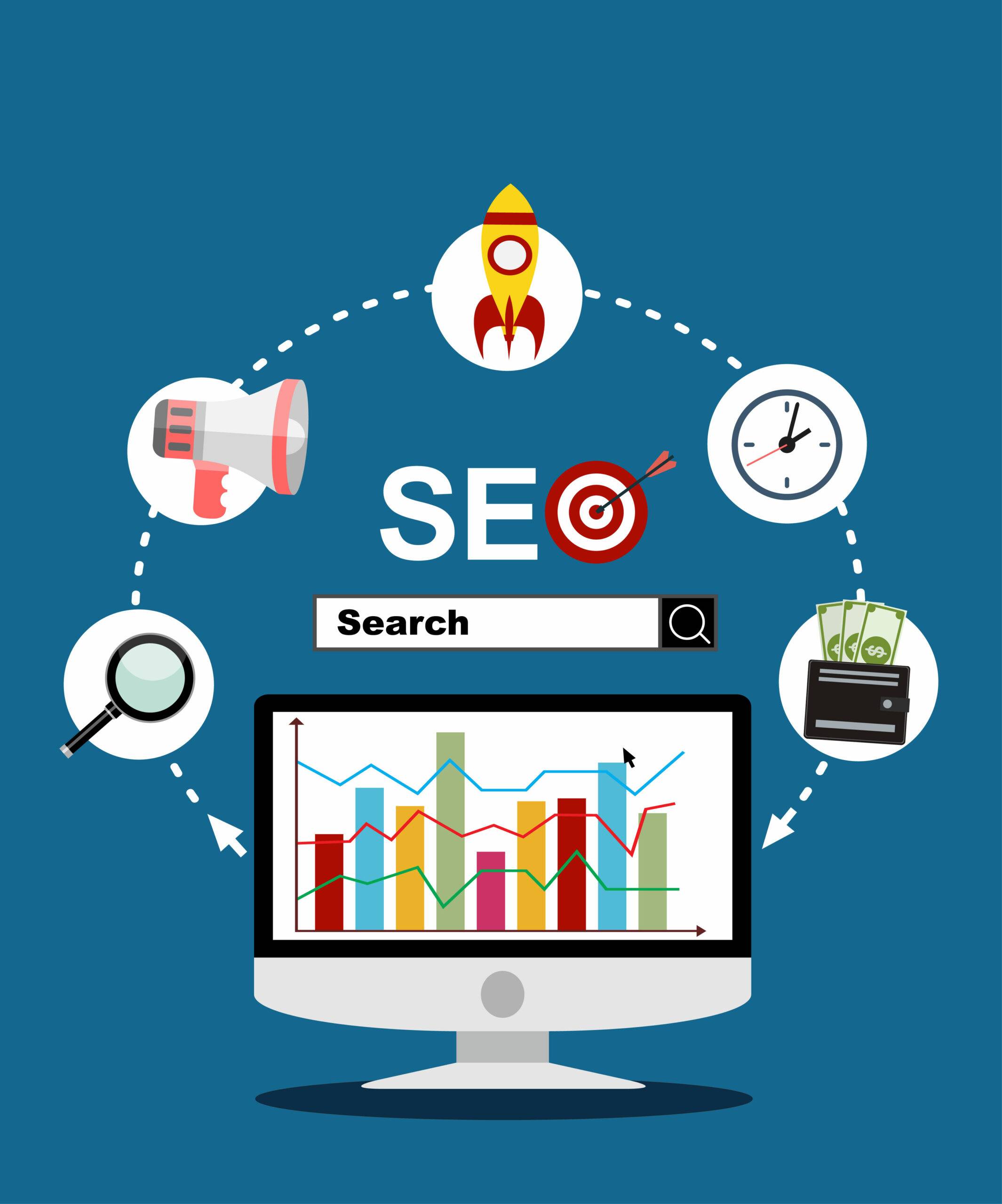

You often hear that SEO is the holy grail of digital marketing. Agencies and consultants endlessly repeat that you have to be on page one of Google to exist. Yet, as a company leader, you know that every Swiss franc invested has to pay off. The question is not whether SEO is “good”, but whether to invest in SEO now, at this precise stage of your company’s development.
Investing in SEO is not a trivial expense. It is a commitment of resources, time and budget that only bears fruit in the medium and long term. For an SME, the margin for error is small. Starting too early can drain your cash without immediate results. Waiting too long can leave the field open to competitors eating into your market share.
So how do you decide? Should you allocate that marketing budget to a content and technical optimisation strategy, or favour more immediate levers? This article helps you analyse your situation objectively so you can make an informed decision, based on profitability and your growth objectives.
The signs that your SME should invest in SEO
SEO is not a simple box to tick, it is a growth lever. If you see the following signals in your dashboards, it is probably time to structure a real SEO strategy.
A fall or stagnation in web traffic
You may have launched a capable website two years ago, but for a few months now the visitor curve has been running out of breath. If your organic traffic is stagnating while your market is growing, that is a problem. It means you are losing visibility exactly where your prospects are looking for solutions.
Traffic is not a simple “vanity metric”. Fewer qualified visitors mechanically means fewer leads for your sales teams to handle. If you rely solely on outbound activity or your existing network to fill the pipeline, you limit your growth potential. SEO is a way to work towards a steady, lasting inbound flow.
Poor positioning on search engines
Run the test: type in the strategic keywords tied to your core business. If your direct competitors systematically appear ahead of you, or worse, if you only appear on the second page, you have a credibility gap.
In B2B, the search for information often precedes any contact. If a decision-maker does not find you during their exploration phase, you do not even make their shortlist. A poor ranking is not just a matter of ego, it is a direct loss of commercial opportunities to competitors who have occupied the digital ground.
A customer acquisition cost that is too high
This is often the main trigger for finance directors. If your strategy relies heavily on paid advertising (Google Ads, LinkedIn Ads), you are renting your visibility. As soon as you cut the budget, the traffic stops. What is more, costs per click (CPC) tend to rise as competition increases.
Investing in SEO works differently: you are building an asset. The initial investment is certainly significant, but the marginal cost of an additional visitor tends towards zero over time. If your customer acquisition cost (CAC) through paid channels becomes unsustainable or eats too far into your margins, shifting part of the budget towards SEO is a financially sound decision for balancing your marketing mix.
TO READ: From ranking to recommendation: why traditional SEO is no longer enough in 2026
 {“model_id”: “text2image_v1/prod/20250509-1424”}
The situations where SEO is not the priority
For all its virtues, SEO is not a universal answer. In certain specific contexts, insisting on investing in SEO can be a strategic mistake.
Tight budget constraints
SEO takes time. It is a marathon, not a sprint. Generally, you should allow between 6 and 12 months before a significant return on investment can be assessed. If your SME is going through a cash crisis or you need to generate revenue this month to survive, SEO is not the answer.
In an emergency, you are better off putting your budget into fast activation levers such as direct prospecting or paid advertising, which give an immediate return, even if they are potentially more expensive per unit. Only invest in SEO if you have the financial solidity to wait for the results.
A hyper-local activity or a confidential niche
If you are a service business operating within a 20-kilometre radius with a very local client base, a complex national SEO strategy is pointless. A well-optimised Google Business Profile listing and a few local pages are often enough.
Likewise, if you sell a hyper-specialised technology solution aimed at only 50 major accounts worldwide, search volume on Google will be close to zero. Nobody types your solution into the search bar because nobody knows it exists. In that case, an approach based on Account-Based Marketing (ABM) and networking will be infinitely more profitable than trying to create content for keywords that do not exist.
A dependence on direct recommendations
Some SMEs, particularly in high-end consulting or highly specialised services, operate almost entirely through word of mouth and networks. Trust passes from human to human, not through a search engine.
If 95% of your revenue comes from referrals and your clients sign without even visiting your website, investing heavily in SEO could be superfluous. A clean, reassuring brochure website is enough to confirm your credibility, without needing an aggressive content strategy to attract cold traffic.
Making the right decision for your SME
To invest in SEO or not? The answer depends on the alignment between your business objectives and the reality of your market.
Assess your current marketing strategy
Look at your data. Where do your best customers come from today? If your current channels are saturating or becoming too expensive, diversifying through SEO makes sense. Analyse how your current site performs: does it convert the few visitors it receives well? There is no point sending more traffic (via SEO) to a site that does not convert. The priority investment would then be redesigning the user experience or the commercial message.
Considering your business objectives
Is your objective fast, aggressive growth, or consolidating what you have?
- If you are aiming for growth in market share and want to become the thought leader in your sector, SEO is essential for occupying the media space.
- If you are aiming for short-term profitability to fund another project, start by optimising your current conversion channels.
SEO is a capitalisation lever. It helps increase the value of your company by creating an autonomous source of prospects. That is a weighty argument if you are considering a fundraising round or an eventual sale.
Analyse your competition
This is often the decider. Use simple tools or commission an audit to see what your competitors are doing. Are they active on content? Are they ranking on the keywords your customers use?
If your competitors are investing heavily, doing nothing means giving them ground. Conversely, if nobody in your sector is active in SEO, you have two options: either it is a golden opportunity to take the lead, or it confirms that your market is not played out on search engines. A close analysis of your target audience will let you decide.
Finding the balance between SEO and other levers
The “SEO vs everything else” debate is often a false one. The reality of a high-performing strategy lies in intelligently integrating the channels. SEO should not cannibalise your budget if it puts your short-term operations at risk, but it should not be ignored on the grounds that results are slow.
For a mature SME, the ideal path often starts with paid channels to validate the offer and generate cash, while progressively investing a share of the profits into SEO to build future profitability. It is that balance which provides both immediate security and lasting growth.
Before signing a quote or hiring a copywriter, ask yourself this simple question: “Do I want to rent my visibility for the rest of my life, or am I ready to invest today to own my growth tomorrow?”
Ready to take the plunge? Discover the services of Smart Impact, an SEO digital agency in Switzerland.