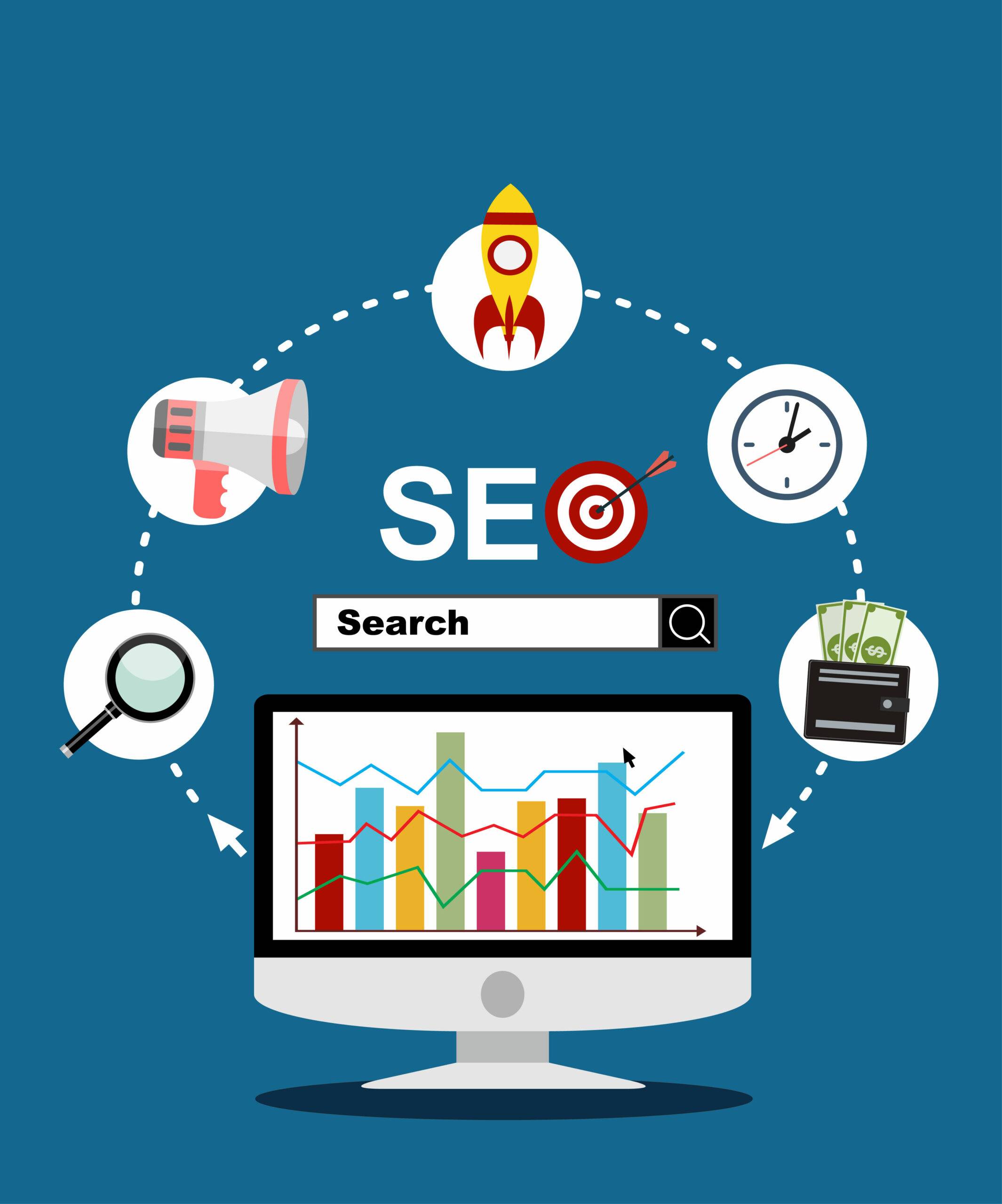
You invest thousands of Swiss francs in your Google Ads campaigns. Your marketing teams spend hours polishing Reels for Instagram and engaging your community on LinkedIn. The results are there: clicks, likes, immediate visibility. In this whirlwind of immediacy, a legitimate question arises for any strategic decision-maker: has SEO become obsolete?
At a time when the TikTok algorithm seems to dictate trends and “pay-to-play” dominates social platforms, SEO can look slow, technical, even outdated. Yet neglecting this channel would be a major strategic mistake. Far from being dead, SEO has simply changed role. It is no longer just a traffic acquisition lever, but the central pillar of your credibility and your digital longevity.
So let us look at the real place of SEO in a modern marketing mix and at how to integrate it intelligently with your social and paid strategies to make the most of your return on investment (ROI).
The lasting value of SEO: a strategic asset
Contrary to received wisdom, SEO is not limited to pleasing Google’s bots. It is above all a strategy for answering demand. When a prospect types a query into a search engine, they express an explicit need. It is that intent that gives organic traffic its inestimable value.
Organic traffic and long-term profitability
Paid advertising (SEA) works like a tap: as long as you pay, the traffic flows. As soon as you cut the budget, the flow stops dead. SEO is closer to buying a property. The initial effort is substantial, the investment in time and resources is significant, but once your position is acquired, it pays dividends over time.
For a B2B company, this translates into a customer acquisition cost (CAC) that tends to fall over time. A well-ranked blog post or an optimised service page can keep attracting qualified leads for years, with no extra cost per click. It is a compounding mechanism, essential for supporting profitable growth.
Credibility and trust: the human factor
In complex sectors such as finance or healthcare, trust is the most precious currency. 88% of consumers trust online reviews as much as personal recommendations. That same logic applies to search results.
Users unconsciously know how to tell a paid ad from an organic result. Appearing in the top natural results signals an authority and a relevance validated by the search engine, not simply bought. For a decision-maker looking for an expensive technology solution, that implicit validation is often the first step towards conversion. Being visible organically means telling your market: “We are the legitimate reference on this subject”.
Durable results in the face of volatility
Social platforms are volatile. An algorithm change on Facebook or LinkedIn can reduce your organic reach to nothing overnight. SEO, although subject to Google updates, offers greater relative stability. By building a technically sound site rich in quality content, you build a solid foundation that does not depend on the whims of a third-party platform.
The rise of social media and paid advertising
If SEO is the foundation, social media and paid advertising are the accelerators. It would be absurd to deny their firepower.
Instant visibility and surgical targeting
The main strength of SEA (Search Engine Advertising) and Social Ads is speed. You launch a campaign this morning, your ads are live this afternoon. For the launch of a new product or to test a new market, that responsiveness is unbeatable.
The targeting capabilities of platforms such as LinkedIn Ads also let you reach precise decision-makers (by role, company size, sector) with a granularity SEO cannot offer. You are not waiting for the prospect to come to you; you go and find them where they are.
Brand awareness and engagement
Social media excels where SEO is limited: creating an emotional relationship and community engagement. SEO answers a question; social media creates the conversation. It is essential for humanising your B2B brand, sharing your company culture and staying top-of-mind with your prospects even when they are not actively searching.

SEO vs. social media vs. paid advertising: a comparative analysis
Do you have to choose? Absolutely not. The mistake would be to see these channels in silos. For a manager seeking performance, the question is how to orchestrate these levers.
Strengths and weaknesses
- SEO:
Strengths: high long-term ROI, qualified traffic (intent-driven), credibility, zero marginal cost per click.
-
Weaknesses: slow results (6 to 12 months), requires constant technical and editorial expertise, dependence on search algorithms.
-
Paid Advertising (SEA/Social Ads):
-
Strengths: immediate results, precise targeting, complete control of the message, ideal for retargeting.
-
Weaknesses: expensive (CPCs rise every year), traffic that stops when you do, and banner blindness among some users.
-
Social Media:
-
Strengths: potential virality, direct engagement, brand awareness, loyalty.
-
Weaknesses: content with a very short life, difficulty measuring direct ROI, the need for intensive content production.
Synergies and strategic integration
The real power lies in integration. Here is how these channels can feed into each other to support your growth:
- SEA in the service of SEO: use your Google Ads campaigns to test which keywords convert best. Once the most profitable terms are identified, launch an SEO strategy to rank organically on them and reduce your advertising costs over time.
- Social to build authority: sharing your blog articles socially sends positive signals. Although “likes” do not directly influence Google rankings, the traffic generated and the visibility earned can lead to natural backlinks, which are crucial for SEO.
- Retargeting to convert organic traffic: a visitor arrives on your site through an SEO article but does not convert straight away? Use the Facebook or LinkedIn pixel to retarget them with a relevant advert (white paper, case study) and move them along your sales funnel.
Case studies: winning hybrid strategies
Take the example of a Swiss financial software company (FinTech). Facing fierce international competition, betting on SEO alone would have taken too long. Betting on SEA alone would have blown up their acquisition cost.
The winning strategy: they created in-depth content (white papers, technical articles) optimised for SEO on long-tail queries (“Swiss banking compliance”, “SME accounting automation”). In parallel, they used LinkedIn Ads to promote that same content to CFOs and finance directors.
The result: a 40% increase in qualified leads within 6 months, with an acquisition cost that fell progressively as organic traffic took over on the strategic keywords.
Another example in the healthcare sector (MedTech) shows how social listening fed the SEO strategy. By analysing the questions doctors asked on forums and LinkedIn, the marketing team identified information gaps. They then produced SEO articles answering those questions specifically, capturing highly qualified traffic that their competitors were ignoring.
SEO is not dead, it has to evolve
Is SEO still useful? The answer is a categorical yes, but with an important nuance. The “old” SEO, which consisted of stuffing pages with keywords to fool Google, is well and truly dead.
Today, modern SEO is a discipline of excellence. It requires understanding user intent, delivering a flawless technical experience and producing content of absolute relevance. It should no longer be seen as an isolated channel, but as the foundation of your digital ecosystem, working in synergy with your paid investments and your social presence.
For leaders, the issue is not choosing between SEO and advertising, but building a marketing architecture where every franc invested in immediate visibility also contributes to building your digital capital for tomorrow.
Ready to audit how your acquisition channels perform? Start by analysing the share of your revenue generated by organic traffic. If it is below 30%, you are probably leaving growth on the table.