Choosing the right type of website is the decision that conditions everything else: budget, timeline, maintenance and results. A brochure website, an online shop and a custom application do not answer the same needs, and picking the wrong format is expensive, either because you pay for features you do not need, or because you quickly find yourself cramped. Before requesting a quote, this article helps you identify the format that genuinely suits your business model in French-speaking Switzerland.
Many French-speaking Swiss business owners approach their project through technology or aesthetics: “I need a nice WordPress site”. That is starting in the middle. The real first question is not “which tool”, but “what must this site achieve for my company”. Once that answer is clear, the right format becomes almost obvious.
Type of website: start from the need, not from the trend
The format of a site follows from a single thing: the business objective it serves. These can be reduced to three broad intentions, and each calls for a different type of site.
The first intent is to inform and convince: presenting your company, your services, your credibility, so that a prospect gets in touch. That is the territory of the brochure site. The second is to sell directly online: taking payment, managing a catalogue, handling logistics. That is e-commerce. The third is to automate or equip a process: a client area, a configurator, complex booking, a connection to your business tools. That is custom development.
Most mistakes come from confusing these intents. You build an e-commerce when a well-made brochure site would do, because “maybe one day we will sell online”. Or the reverse: you build a light brochure site when selling is the heart of the model, and everything has to be redone six months later. Starting from the real objective, rather than the hypothetical future, avoids both traps. The question of price then follows directly from that choice, as we set out in our article on the price of a website in Switzerland.
The brochure website
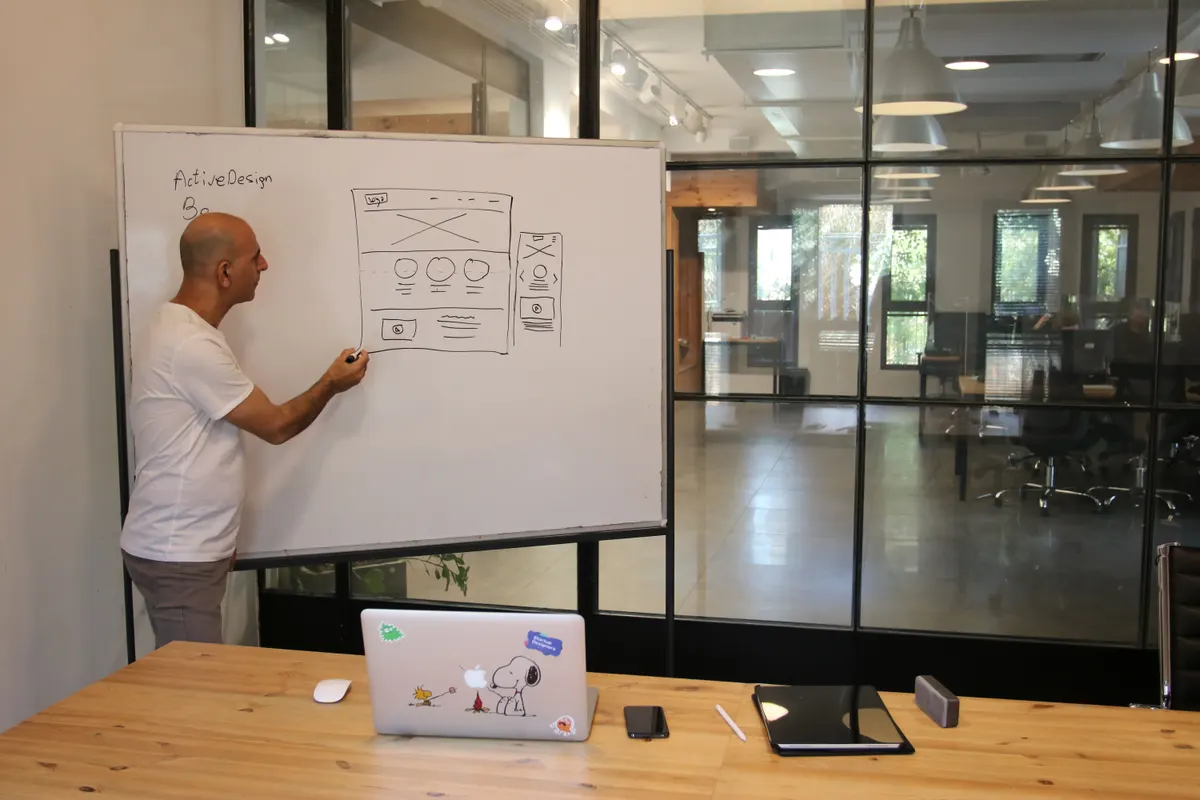 Photo: Shuki Harel / Pexels
The brochure website is by far the most widespread format and the best suited to most service SMEs. Its objective is simple and powerful: to be found, to inspire trust, and to make people want to contact you. It presents your activity, your services, your work, your team and your contact details, in a structure designed to guide the visitor towards the action that counts (a call, a form, a quote request).
For whom? Companies whose sale is not closed online but in a conversation: tradespeople, consulting firms, professional practices, service providers, B2B in general. The site does not take payment, it generates qualified contact.
Its strengths. It is the fastest format to implement, the most economical to buy and to maintain, and the easiest to develop over time. Well built, optimised for mobile and for search, a showcase site is often the most profitable investment an SME can make: it works around the clock like your best salesperson, without the complexity of a shop.
Its limits. It does not sell directly. If your model relies on online transactions, a showcase site quickly hits its ceiling. But beware of the opposite reflex: adding a shop “just in case” weighs the project down with no benefit if online selling is not a genuine pillar of your business.
The e-commerce site
An e-commerce site exists to sell, full stop. It adds a complete mechanism to the brochure website: product catalogue, detailed sheets, basket, secure payment, stock management, order tracking, and all the logistics that go with it. It is a change of nature, not just an extra module.
When should you choose it? When online sales are (or are about to become) a core revenue channel, and the volume justifies the investment and the organisation that goes with it. Selling online is not just about taking payments: it means managing stock, picking orders, arranging shipping, handling returns and answering pre-purchase questions. The site is only the visible part of that chain.
In French-speaking Switzerland, e-commerce has its own specifics that need to be built in from the start: the expected payment methods (TWINT in particular), prices displayed in CHF, VAT, delivery and its lead times. Underestimating these aspects means risking losing the buyer at the crucial moment of payment.
Link with your e-commerce strategy
Successful e-commerce is not just a question of a website: it is a company-wide project. Before you start, make sure logistics, customer service and stock management can keep up. We detail the Swiss specifics (payments, VAT, delivery) in our article on selling online in Switzerland. It is a useful read before choosing between a brochure site and a shop: it shows concretely what online selling involves beyond the site itself.
The bespoke site or application
When standard tools are no longer enough, you move into custom development. This is no longer “one more website”, it is a tool designed specifically for a need that nothing on the market covers as it stands: a client area with features specific to your business, a product configurator, a complex booking system, a deep connection to your ERP or your CRM, a business web application.
When should you choose it? When your process is your competitive advantage, or when no off-the-shelf CMS properly meets your need. Custom development offers total freedom, but it calls for precise specifications, a larger budget and real thought about maintenance over time. It is here, more than anywhere else, that a rigorous scoping document makes all the difference; we give the template in our article on the website specification document.
The trap to avoid. Believing you need bespoke when a well-configured CMS would do the job. Bespoke development is justified by genuine functional singularity, not by the wish to have “something unique”. A good partner will tell you frankly: the proven solution is often faster, more reliable and cheaper to maintain.
Decision table
To decide, compare the three formats against four simple criteria. It is that grid, more than a supplier’s opinion, which should guide your choice.
- The main objective. Informing and generating contact → brochure site. Selling online → e-commerce. Supporting a specific process → bespoke.
- Budget. The brochure site is the most accessible format; e-commerce asks for more; bespoke is the most open-ended, because its cost depends entirely on functional complexity.
- Scalability. A brochure site can often take on a light selling module later; a genuine e-commerce site or a bespoke project has to be planned from the start with its growth path in mind.
- Maintenance. The more a site does (payment, stock, integrations), the more demanding its upkeep. That recurring cost has to feed into the decision, not just the build invoice.
The right answer is not the most impressive format, it is the one that matches what your business actually needs to accomplish online. A well-crafted brochure site that generates enquiries is worth infinitely more than a sophisticated e-commerce nobody uses. And if you are hesitating between doing it yourself and calling on a professional, whatever the format, our guide DIY site or professional site sets out the right criteria.
In summary
The type of website is not a technical question, it is a strategic one. Start from your business objective, test it against the three formats, and let the decision grid settle it. The brochure website suits the vast majority of service SMEs; e-commerce is the obvious choice when online selling is central; bespoke answers the needs that nothing else covers. In every case, the best move is still to talk it through with a partner who takes the time to understand your model before pointing you towards a solution.
Going further
- Further reading: DIY site or professional site: a strategic guide
- Further reading: Which CMS for an SME’s SEO
Not sure which format is right? Discover our web design and e-commerce offers, or let's talk about your project.