
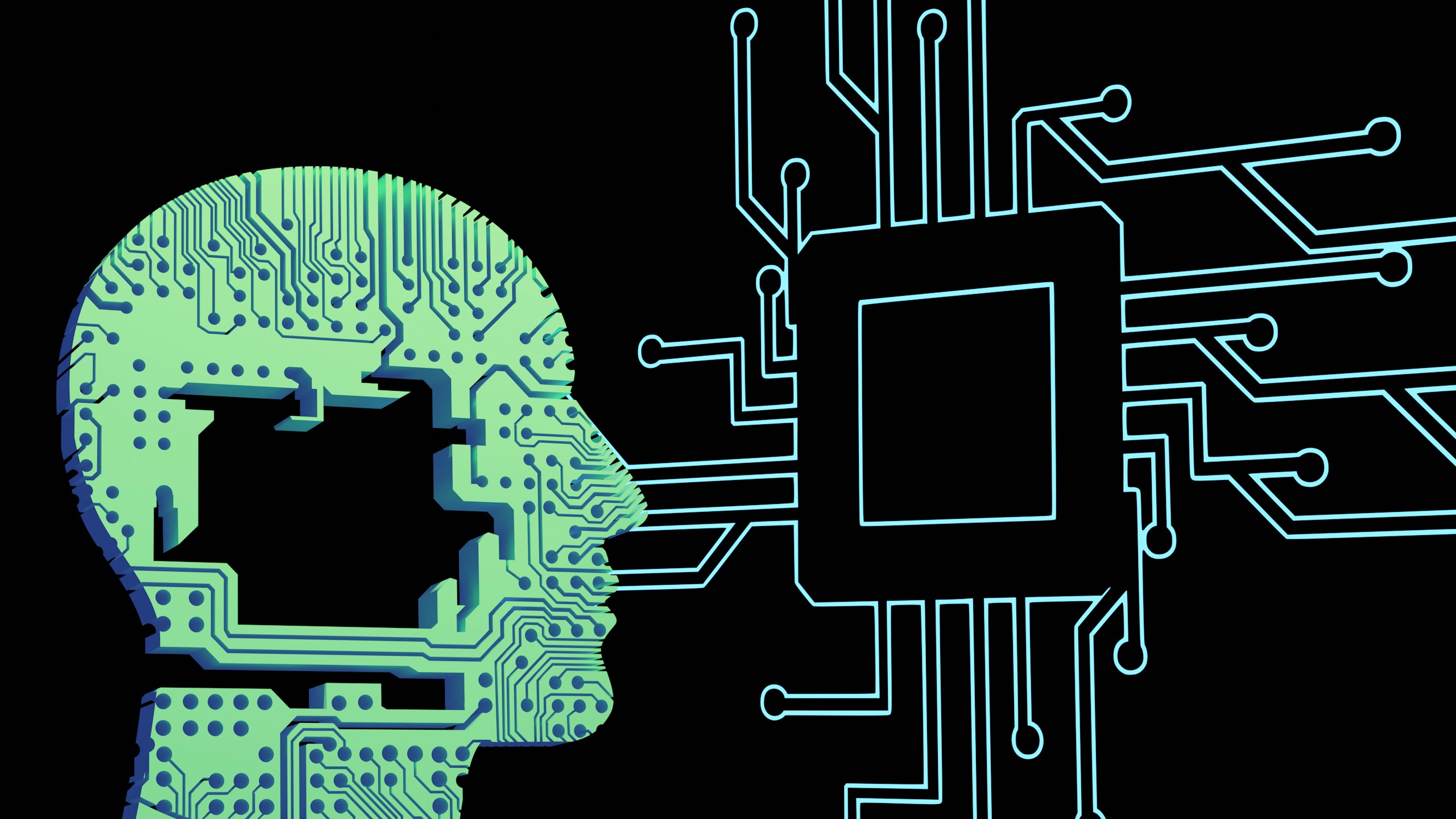
We are living through a rather fascinating paradox, it has to be said. On one side, AI (artificial intelligence) technologies are reaching spectacular technical maturity, able to process data, generate content and predict trends with unprecedented accuracy. On the other, the actual integration of these tools into companies often runs into an invisible wall.
That wall is not technological, it is cognitive. It is the friction between the hyper-fast algorithm and our “Human Operating System” (Human OS). A system inherited from a few thousand years of evolution, and riddled with mental shortcuts: cognitive biases.
Why does a manager reject a reliable algorithmic prediction to trust their “instinct”? And why exactly does a team reject a tool that halves its workload? The answer lies not in the quality of the code but in the psychology of change.
Successful AI adoption does not depend only on the machine’s IQ (Intelligence), but on the EQ (Emotional Intelligence) of the organisation faced with its own defence mechanisms.
Here are the major psychological biases that shape our relationship with AI technologies, so you can spot them and then overcome them.
Resistance bias: why do we reject AI?
Before even misusing AI, our first reflex is often to reject it. That rejection is not always rational, far from it. It is fuelled by powerful psychological defence mechanisms that seek to preserve our sense of control and competence.
1. Algorithm aversion
This is probably the best-documented obstacle, and also the most costly one for companies.
- The mechanism: human beings judge mistakes made by a machine far more harshly than those made by a human. If a colleague gets a sales forecast wrong, we put it down to the complexity of the market. If an AI makes the same mistake (even when it is right 9 times out of 10), we immediately conclude it is incompetent and useless.
- The business impact: this bias often leads to promising AI projects being abandoned prematurely at the first “hallucination” or imperfection, sending the company back to manual methods that perform worse but are “humanly excusable”.
💡 Did you know? The experiment that proved how “unfair” we are to AI
The study by Berkeley Dietvorst (Wharton School) brought to light a fascinating behaviour called Algorithm Aversion.
The researchers asked two groups of participants to predict student performance from past data. The first group could use a high-performing predictive algorithm, while the second had to rely on its own judgement.
When both the algorithm and the human made a prediction error, participants instantly lost confidence in the algorithm, while remaining forgiving towards human judgement.
So we unconsciously prefer a human who is often wrong to a machine that is rarely wrong. In a company, this means that a single AI error can be enough to discredit an entire digital transformation project, even if the tool is statistically 20% more effective than the manual methods in place.
2. Status quo bias
The unknown is frightening, and AI technologies represent the ultimate unknown for many business processes.
- The mechanism: it is the irrational preference for the current situation over change, even when the change brings an objective net gain. Our brain perceives the cost of the effort to adapt (learning to prompt, changing software) as greater than the future productivity gain.
- The business impact: you hear sentences like “We have always done it this way in Excel”. This bias keeps obsolete, time-consuming processes alive simply because they are familiar and comfortable. And it slows digital transformation dramatically.
3. The Ikea effect (attachment to effort)
This bias explains why automation can be perceived by employees as a loss of value.
- The mechanism: in behavioural psychology, the IKEA effect describes our tendency to place disproportionate value on things we have created or assembled ourselves. We like our work because it took effort.
- The business impact: a market report generated in 10 seconds by an AI can seem to have less “value” in an analyst's eyes than a report they spent three days compiling by hand. AI is then seen as a tool that devalues expertise and “work well done”, creating strong cultural resistance.
FURTHER READING: Employee resistance to new digital tools: how do you support them?.
Blind trust bias: why do we misuse AI technologies?
If resistance slows adoption, overconfidence compromises security. Once the tool is accepted, another set of cognitive biases comes into play. It pushes us to lower our guard and delegate our critical thinking to the machine.
1. Automation bias
This is the most insidious danger for the operational staff who use AI daily.
- The mechanism: the human brain, to save energy (the law of least effort), tends to favour suggestions from an automated system over its own vigilance or contradictory non-automated information. If the AI says “A” and our instinct says “B”, we end up choosing “A” out of cognitive comfort.
- The business impact: it leads straight to passive approval of the results. Generated emails are no longer reread, produced code is no longer checked. The AI's errors (hallucinations, data bias) then go unnoticed. They are built straight into the final deliverables, creating major legal or reputational risk.
2. Anthropomorphism
This bias changes our emotional relationship with a statistical tool.
- The mechanism: we have an innate tendency to project human characteristics (consciousness, intention, intelligence) onto inanimate objects, especially when they use natural language as chatbots do. We say “the AI thinks that…” or “ChatGPT knows that…”.
- The business impact: treating a probabilistic model as an all-knowing colleague is dangerous. We grant it a moral and factual authority it does not really deserve. It stops us checking sources. If the AI says it with that much assurance, it must be true. The result: it distorts decision-making by humanising raw data.
FURTHER READING: Employee resistance to new digital tools: how do you support them?
Social and decision-making bias: why do we buy AI technologies?
At management and strategic purchasing level, AI adoption is not always driven by a rational ROI calculation. More often, it comes from group and market dynamics.
1. Hype and FOMO (bandwagon effect)
AI is the absolute buzzword, and one that creates intense social pressure on decision-makers.
- The mechanism: it is the tendency to adopt a behaviour or a technology mainly because “everyone is doing it”, regardless of your own need. The fear of missing the train (Fear of Missing Out) takes precedence over strategy.
- The business impact: companies buy expensive AI solutions without having defined a single clear use case, or even prepared their data. The result: “ghost projects” that end up in a drawer after about six months, not because the technology failed, but because there was no need in the first place.
2. The sunk cost fallacy
This bias often acts as a brake on the radical innovation that AI offers.
- The mechanism: we tend to persist with a course of action (using old software) simply because we have already invested a great deal of time, money or effort in it, even when that investment is definitively lost and the AI option is objectively better.
- The business impact: a company may refuse to implement an AI-driven CRM that costs 10x less and is 10x more effective, simply because it spent a million francs installing a traditional behemoth three years ago. The weight of the past (the sunk investment) blocks the optimisation of the future.
TO READ: Leader’s guide: 3 steps to turn technology fear into mass adoption.
Beneath the biases, emotions: what is really at play
Cognitive biases are only the visible part, in fact. Underneath, very human emotions drive whether AI is adopted or rejected, among employees and leaders alike.
- For the employee: the fear of becoming obsolete. What they fear is less the loss of their job than the loss of their value. When AI takes over what made them expert, they can feel dispossessed of their professional identity. On top of that comes the anxiety of surveillance: is this algorithmic “eye” going to be used to judge them?
- For the director: ROI anxiety and unrealistic enthusiasm. Pressure for a quick return sometimes leads to forced, poorly supported adoption, which makes team resistance worse. Conversely, the illusion of simplicity (“you just install the tool”) forgets that an AI needs experts to steer it and then interpret it.
The counter is one sentence to hammer home internally: “AI is not taking your place, it is taking the tasks you hate.” And better still: involve the end users in defining the tool’s role. When they have a say, they become allies of the change rather than its victims.
“De-biasing” strategies: how do you manage people in the age of AI?
Understanding these biases is the first step. The second is to put organisational safeguards in place to stop our brains sabotaging innovation. Here are three strategies for aligning the human factor with the power of AI technologies.
1. Transparency to counter aversion
Opacity is quite simply the enemy of adoption. To overcome algorithm aversion, you need to favour Explainable AI (XAI).
- The action: do not present AI as a magical “black box”. Show the teams why the AI made that recommendation (which criteria, which data).
- The result: when employees understand the logic behind the output, they tolerate the occasional error far better, and they accept the tool as rational help rather than an obscure threat.
2. The human in the loop to counter automation bias
To avoid cognitive passivity in front of the screen, human intervention has to be forced structurally.
- The action: put “human-in-the-loop” protocols in place. For example, AI should never “send” a campaign or “approve” a loan on its own. It should “prepare the draft” or “suggest a score”, obliging a human to take the final approving action (the decisive click).
- The result: it maintains the expert’s vigilance and responsibility (accountability), while still benefiting from the speed of the machine.
3. Training in critical thinking to counter anthropomorphism
Technical training (how to prompt) is nowhere near enough. Cognitive training is needed too.
- The action: train your teams to doubt AI, quite simply. Encourage random fact-checking of the results. Keep reminding them that AI is an engine of statistical probability, not a conscious entity in possession of the truth.
- The result: healthier, safer use, where AI is treated as a very fast but occasionally untruthful intern rather than an oracle.
The alliance of intuition and calculation
Artificial intelligence is unquestionably a tool of extraordinary power. The trouble is that it has to work with biological hardware that is some 200,000 years old: our brain.
We have seen that failures to adopt AI technologies are not always down to software bugs, but to cognitive bugs: our fear of losing control (Aversion), our intellectual laziness (Automation) or our social conformity (FOMO).
To succeed in your AI transformation in Switzerland, updating your servers is not enough. Update your management culture. Success will belong to the organisations that manage to build a clear-eyed alliance between human intuition and algorithmic calculation, by recognising and neutralising their own psychological biases.
AI will not replace managers. But managers who understand the psychology of AI will replace those who do not.
🚀Discover Smart Impact’s services, a 360° digital agency in Switzerland.
SOURCES:
Here are the expert sources used to write this article:
1. Academic sources (cognitive and behavioural psychology)
- Dietvorst, B. J., Simmons, J. P., & Massey, C. (2015) – Algorithm Aversion: the seminal study published by the Wharton School proving that humans lose confidence in an algorithm faster than in a human after seeing it make a mistake.
- Kahneman, Daniel (2011) – Thinking, Fast and Slow: although general in scope, the Nobel laureate's book is the basis for understanding status quo bias and the cognitive laziness that leads to automation bias.
- Parasuraman, R., & Manzey, D. H. (2010) – Complacency and Bias in Human Use of Automation: a reference study on how excessive trust in automated systems reduces human vigilance.
2. Consulting firm studies (management and organisation)
- McKinsey & Company – The human side of generative AI: their recent reports analyse specifically how employees' emotions and psychological barriers slow the deployment of generative AI in business.
- Harvard Business Review (HBR) – Collaborative Intelligence: Humans and AI Working Together: a key article by James Wilson and Paul Daugherty covering anthropomorphism and the need for a “human-in-the-loop” approach.
- MIT Sloan Management Review – Artificial Intelligence and Business Strategy: their quarterly research documents the bandwagon effect and the investment mistakes tied to technological FOMO.
3. Institutional and technology sources
- CNIL (France) / Federal Data Protection Commissioner (Switzerland): their guides on AI ethics often address transparency bias and the need for explainable AI (XAI) to secure user trust.
- NIST (National Institute of Standards and Technology) – “AI Risk Management Framework”: this reference framework includes entire sections on human bias and the perception of risk in AI systems.