Getting inside your clients’ heads is where it all starts
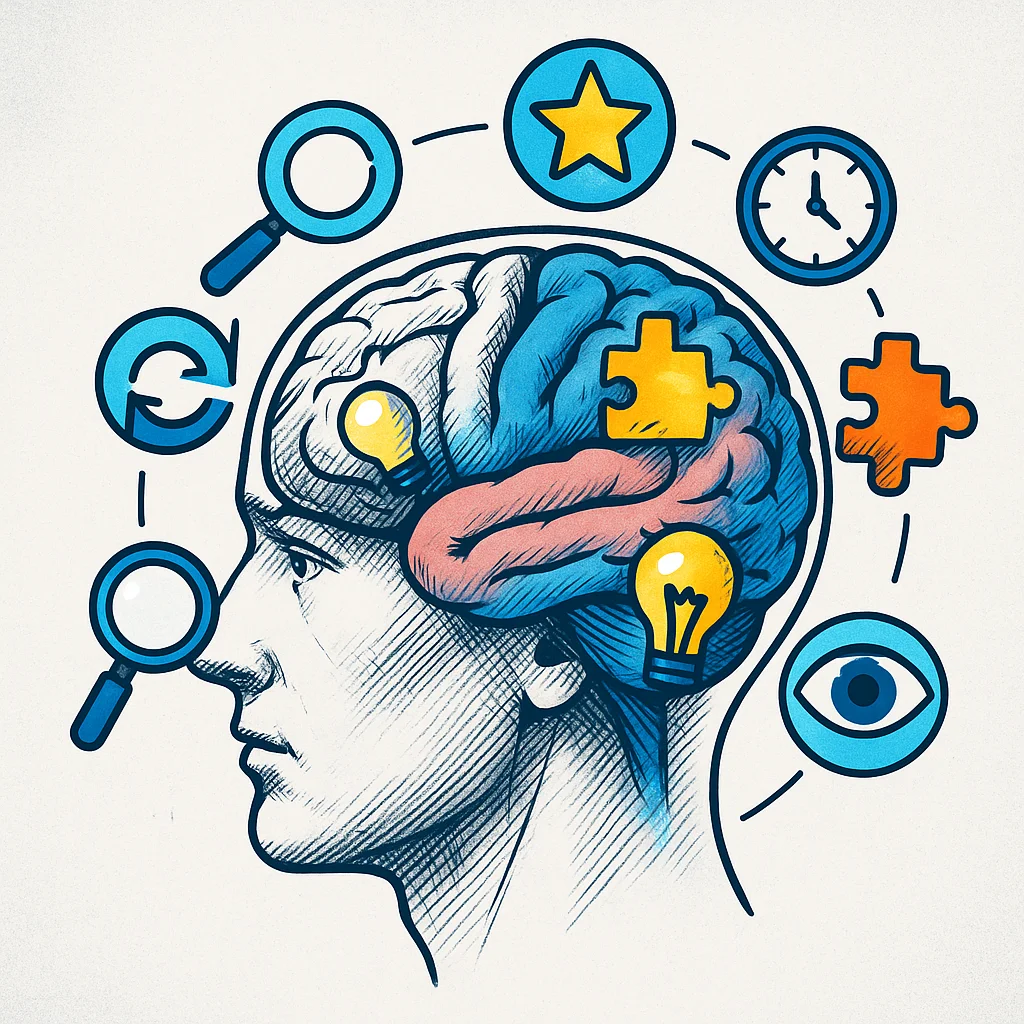
A brand does not live in an Illustrator file or on a nicely printed brochure. It lives in the minds of those who observe it, assess it, feel it. Everything is decided in the first few seconds. That moment when the brain decides, sometimes with no apparent logic. At Smart Impact, we know it: what counts is not only what you say, but what your client believes they perceive. That is where cognitive biases take on their full meaning. They are the shortcuts of our minds. And used well, they can turn a brand into an obvious choice.
Understanding these mental shortcuts before trying to trigger them
A cognitive bias is not a flaw. It is a habit of thought, an often unconscious automatism that helps us sort, judge and decide. The human brain loves saving energy. Rather than analysing every piece of information, it classifies. It associates. It guesses. It fills the gaps. And it is by understanding these mechanisms that you can create a brand that imprints itself on the mind and settles there for the long term.
Seven mental levers to make your brand unforgettable
Halo effect, it all starts with a first impression
A well-managed logo, a colour that stands out, a coherent graphic world, and your brand already looks professional. What is beautiful becomes good. What is clear seems reliable. The brain generalises from one positive detail. It builds a global image from one striking element.
Take Apple. As soon as you see a silver apple on a white background, you think innovation, design, quality. Even without having touched the product, the trust is already there. It all starts with the care given to the smallest visual detail.
If you want to activate this effect, leave nothing to chance. Every pixel, every word, every element of your brand guidelines must send the same signal: that of a brand that knows what it is doing. Because once the halo is in place, it lights up everything else, even your flaws.
Social proof: other people’s opinions matter more than we admit
Before choosing, we look at what others do. It is human. The more popular a brand seems, the more legitimate it becomes. The more reassuring it is. In a world saturated with offers, collective opinion serves as a compass. We read the comments, we look at the ratings, we search for the stars. And we act accordingly.
Amazon is a good example. It is not the product sheets that sell, it is the customer reviews. A product rated 4.9 out of 5 attracts ten times more attention than a better-presented competitor with a lower rating.
For your brand, showcase your satisfied clients. Show that there are many of them. Collect, share, make trust visible. Social proof cannot be manufactured, it is cultivated. And it weighs heavily in the minds of those who hesitate.
Anchoring bias, the first piece of information becomes the reference point
The brain loves to compare. But it never compares in a vacuum. It looks for a baseline. A first piece of information that will serve as a reference point. After that, everything it sees is judged from that mental anchor. And often it is the first price, the first promise or the first image that plays that role.
A site that opens with an irresistible offer sets the tone. The rest seems within reach. A product placed next to a very expensive one looks affordable, even if it remains costly. The order in which you present things completely changes how value is perceived.
Use this bias by thinking through your content hierarchy. Put forward whatever will create the anchoring effect you want. If you want an offer to look generous, start with a more expensive one. If you want your service to look complete, introduce it with a strong promise. That first contact leaves a lasting imprint.

Scarcity effect, what is limited becomes desirable
When something becomes scarce, it becomes precious. It is instinctive. People hate missing an opportunity. They hate even more seeing others enjoy an advantage they let slip. Urgency drives action. Scarcity creates desire.
The success of limited editions, flash sales or exclusive products rests entirely on this mechanism. A sneaker model announced as available for 48 hours only triggers a rush. Even among people who did not need it.
If you offer an exceptional deal, frame it in time or in quantity. Do it honestly. The effect only works if it is sincere. Too many limited offers kill credibility. Used well, this lever turns simple hesitation into action.
Confirmation bias, we always look to validate our own choices
Once a client has chosen you, they want to believe they were right. It is a mechanism of self-justification. They will filter information to reinforce their choice. They will more readily believe what confirms their opinion, and ignore what contradicts it.
A brand that understands this reflex can support it. After a purchase, it is useful to send testimonials from other satisfied clients. To recall the commitments kept. To highlight the benefits of the option chosen. That is not brainwashing, it is connection.
The more your client feels validated in their decision, the more they will talk about it around them. They become a natural relay for your communication. They defend their decision and therefore your brand. It is very much in your interest to help them through that inner movement.
Ikea effect, the more you take part, the more attached you become
Assembling a shelf yourself makes that shelf more precious. That is exactly what happens with brands that let their customers personalise, influence or co-create. Personal investment creates attachment. And attachment creates loyalty.
Nike lets you create your own trainers. Many coffee brands offer bespoke blends. Some brands ask their customers for their views on future collections. All of them play on the same simple principle: engagement through contribution.
Bring your customers into your process. Give them the chance to leave a mark. It strengthens their emotional bond with your world. And it turns them into allies.
Mere-exposure effect, repetition builds trust
What is familiar strikes us as more trustworthy. Even when we have not really assessed it. It is an illusion of closeness. The brain equates what it has seen several times with something reliable. It tells itself that if this keeps coming back, it is probably good.
Brands that show up everywhere, consistently, pull this lever without even thinking about it. An advert seen regularly, a logo glimpsed several times, a newsletter with a steady rhythm. All of it creates a familiarity that reassures.
Do not aim to saturate, but to show up regularly. Be present in your customers' environment. Stay consistent in your tone, your visuals, your messages. Discreet repetition is far more powerful than a sudden, isolated appearance.
Putting all this into action without falling into the trap of forcing it
You do not need to use all these levers at once. Choose the ones that resonate with your brand, your audience, your strategy. Start small. Test. Listen to the feedback. Adjust. At Smart Impact, we build brands that speak to the heart and the mind. Not conversion systems on a production line.
Building a brand that lasts starts with respecting the client’s intelligence
Using cognitive biases means understanding how the human brain works. It does not mean abusing them. A brand that cheats or overplays its hand always ends up being found out. A brand that understands and supports becomes unforgettable. That is the line we draw every day. And the one we invite you to follow.
For those who scrolled this far without reading everything, here is what to remember
A human brain moves fast, judges fast, and forgets fast. An unforgettable brand leaves no choice, it sticks to the brain.
Here are the seven levers to pull if you want your brand to leave a mark:
- Create a halo effect with a polished visual identity. Make everything you show inspire belief in the rest.
- Lean hard on social proof. People look at what others do. Show the reviews, the figures, the trust signals.
- Set a strong anchor with the very first piece of information. One good reference point is enough to influence every comparison that follows.
- Play with scarcity. What is rare attracts. What disappears becomes desirable. So never cheat with that.
- Feed the need for confirmation. Reassure those who chose you. They want to have been right. Give them that satisfaction.
- Involve your customers. The more they take part, the more attached they become. The Ikea effect works in digital too.
- Stay visible without being noisy. What comes up often becomes familiar. What is familiar inspires trust. It is as simple as that.
You want your brand to stay top of mind. So aim accurately, not loudly. The brands we remember are not the ones that shout. They are the ones that resonate.
Going further
Harvard Business School – The IKEA Effect (2011) 🔗 Link to the study “Consumers value a product more highly when they have taken part in making it, even minimally.” “This cognitive bias turns the act of buying into an act of emotional ownership.”
GfK – Best Brands Insights 🔗 Link to the study “When a brand confirms a customer's expectations, it mechanically strengthens their loyalty.” “Confirmation bias acts as a post-purchase amplifier.”
ResearchGate – Scarcity Tactics in Marketing 🔗 Link to the study “Perceived urgency increases purchase intent, especially in competitive environments.” “Scarcity affects not only behaviour, but also recall.”
ArXiv – Advertising and Brand Attitudes 🔗 Link to the study “Repeating a message increases familiarity, even without a strong logical argument.” “Exposure bias works quietly, with a very high cumulative effect.”